

HOBE SOUND, FLORIDA | Work at the Apogee Club continues at a steady pace, with more elements of this ambitious undertaking in Martin County coming on line in recent months.
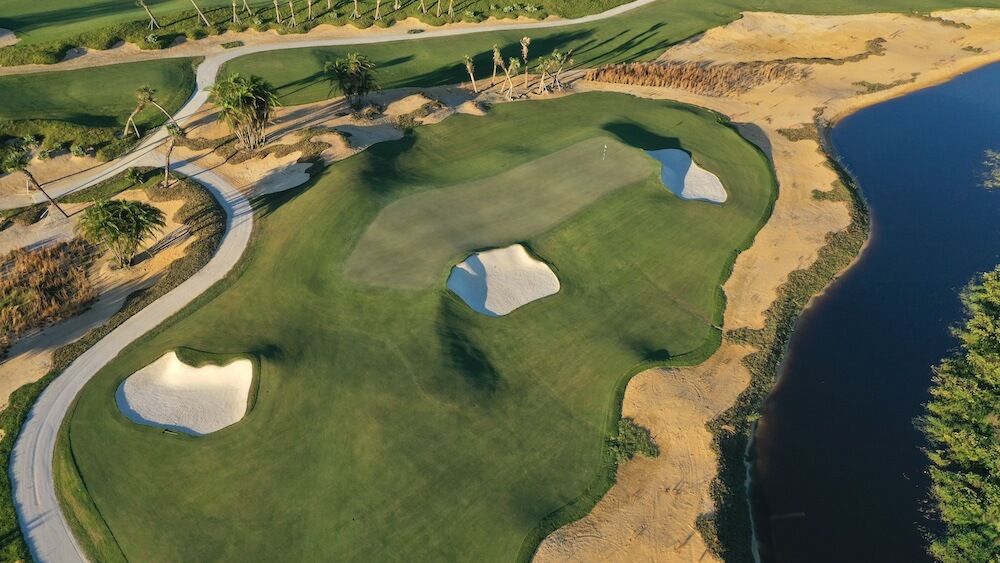
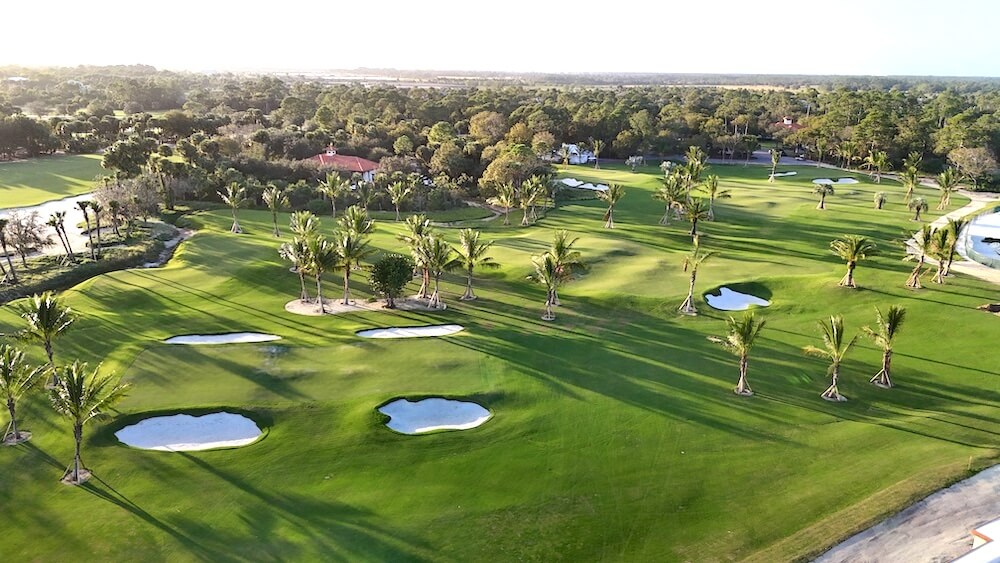
The most compelling of those is the second 18-hole course, dubbed the South. Designed by former USGA CEO Mike Davis and Tom Fazio II, the namesake and nephew of noted architect Tom Fazio, this very walkable layout has been lavished with rave reviews for its interesting routing, well-contoured land, ample fairways and greens that are generally receptive to run-up shots. The lakes and creeks that abound are visually pleasing, and so are the old-growth live oaks that proliferate in places.
As for the golf holes, they are designed to be both strategic and fun. The key, of course, is playing off the proper tees, and golfers should have no trouble finding the ones that suit them best. That’s because Davis and Fazio have provided seven sets of markers on the par-72 track to accommodate tour professionals (at more than 7,700 yards), rank beginners (with the forwardmost tees being 4,039 yards) and everyone in between.

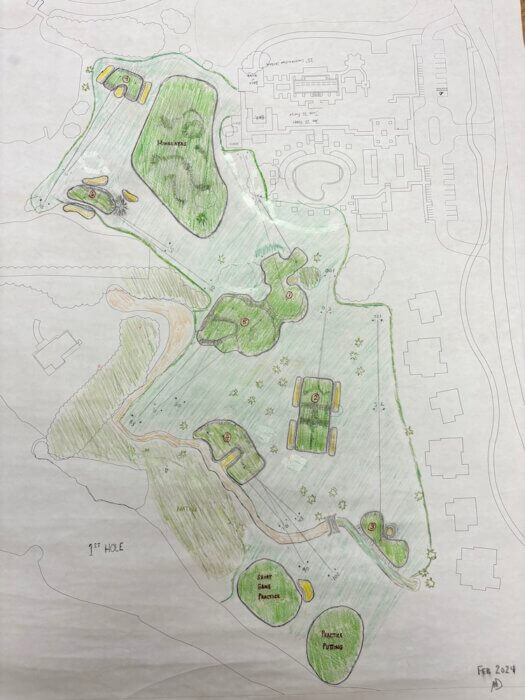
But other parts of the project are coalescing as well, among them a seven-hole “wee course” by Davis evoking such Old World classics as Biarritz and Redan. He has also crafted a homage to the Old Course at St Andrews, which has seven double greens, by having the first and fifth holes share one.
From the back tees, the layout measures a tick more than 700 yards, with holes ranging in distance from as short as 70 yards (the Lion’s Mouth) up to 130 (Boomerang) and 145 yards (Road).
In addition, Davis has designed an 18-hole putting course modeled after the fabled Himalayas, which is home to the St Andrews Ladies Putting Club in that Scottish burg.
A pair of clubhouses – one 70,000 square feet in size and the other 50,000 square feet – are rising on the property, comprising roughly 1,200 acres and bisected by the Kanner Highway, aka Florida State Road 76. Also under construction are villas for use by members and their guests.
In fact, there is so much going on these days at Apogee that rounds are often accompanied by the “beep-beep-beep” of bulldozers and backhoes backing up and the sight of dump trucks and other heavy equipment moving around the grounds.
Still to come is a third 18-hole course, Apogee North, which is currently under construction and being fashioned by Kyle Phillips of Kingsbarns and Cal Club fame, as well as a 12-hole track by Fazio, whose long, dark hair and tanned complexion make him look more like a surfer who spends his off-hours at the Square Grouper Tiki Bar in nearby Jupiter than a man who designs and builds golf courses for a living. What’s unique about that layout, he says, is that it will feature only short par-4s, measuring anywhere from 260 to 340 yards in length.
“Of the three course sites, the one we picked had the lowest, most nondescript land and the fewest number of trees. But the trees it did have were big live oaks. That’s what really drew us to that piece of property.” – Mike Davis
Throw in a circular practice facility with 160,000 square feet of target greens, a 7-acre short game area and a performance and teaching center also offering clubfitting, and you have a first-rate menu of amenities. And when those are combined with soon-to-be-completed swimming pools, tennis and pickleball courts and a spa and fitness center, Apogee will be what its name suggests is the ultimate goal: a club that exists at the highest possible level.
The presence of a helipad will certainly help in that regard as well.
Apogee is the brainchild of two owners, who are 50-50 partners. One is Michael Pascucci, founder of the Sebonack Golf Club in Southampton, New York, as well as a founder and owner of the Bear’s Club in Jupiter, Florida. The other is Stephen Ross, owner of the NFL’s Miami Dolphins and a real estate magnate who is currently developing hundreds of thousands of square feet of property in and around West Palm Beach. Both men are in their 80s, which explains why Pascucci describes Apogee as a legacy project. The goal is to make sure the mark they leave with this undertaking is an exceptional one.
About a year ago, I accepted an invitation to join a small group of journalists for a visit, so we could tour the property and assess the work at Apogee since construction on the West Course, designed by Gil Hanse and Jim Wagner, began in October 2022.
We played a couple of rounds on that track and toured the site of the South Course, where Davis and Fazio were transforming a flat piece of land into one full of character by moving massive amounts of earth. At the same time, those designers were coordinating construction of all the golf courses and practice facilities.
“Of the three course sites, the one we picked had the lowest, most nondescript land and the fewest number of trees,” Davis said. “But the trees it did have were big live oaks. That’s what really drew us to that piece of property.”
The consensus after that initial trip was that the West was an eminently enjoyable golf course.
We were also impressed by what was taking shape on the South, which was being fashioned in hopes of it one day hosting, perhaps, a PGA Tour event or even a PGA Championship while also being the sort of members’ course that golfers of all levels can happily play time and time again.
“It’s a big course, varied and interesting with so much width and space. We could create different options and strategies because we had the room to put in center features, like bunkers, and add what I call Easter eggs, which are subtle little bumps that can send shots off into different directions.” – Tom Fazio II
At dinner our last evening, Pascucci asked us to return when the South was open for play. And it was not just the wine talking when we replied that we would be happy to do so.
Ten months later, in early December 2024, most of the band came back together for another look-see.
First up was a round on the South, which had only just opened. And as I warmed up, I thought of what the architects had previously told me about the layout.
“It’s a big course, varied and interesting with so much width and space,” Fazio said. “We could create different options and strategies because we had the room to put in center features, like bunkers, and add what I call Easter eggs, which are subtle little bumps that can send shots off into different directions.”
It is also why the designers were able to ensure the par-3s each played in a different direction. The 5-pars, too.
That scale also made it easier for the architects to make it fun, for all players, especially the higher handicappers.
“They’ll never lose a ball out here,” Fazio said. “That’s important to me because I hate aggravation golf.”
A drummer and lover of classic rock, Fazio II also made it entertaining by creating an alternate scorecard for the South assigning the names of different songs by Led Zeppelin to each hole. Such as Stairway to Heaven, Dazed and Confused and Bring It On Home.
As for Davis, who had stepped down from the top job at the USGA in 2021 after 32 years with the organization, he spoke about not forcing golfers to challenge water that exists in the lakes and creeks on the 400-acre site unless it was their intention.
“We wanted to make the South very welcoming to the recreational golfer but also challenging to the tour player,” he said. “And we wanted them all to remember it as being fun.”
As someone whose handicap index hovers in the high single digits and is happiest playing tees measuring from 6,000 to 6,200 yards, I found the South from the white markers very friendly indeed.
Consider the second, a modest 4-par that doglegs sharply to the left, with a lake running along that side. The water felt somewhat intimidating on both the drive and approach. And I took note of the sandy waste area between the fairway and the lake as well as the bunkering in the landing area and by the green. But none of those hazards ever came into play, and in spite of some trepidation, I managed to make my 4.
I also felt a little uneasy as I played the next hole, a short par-3 requiring only a gap wedge.
That was due to the creek stretching down the left side, and the two gaping bunkers guarding the green left and right.
Next came the par-5 fourth, which created its own anxiety with another lake looming on the left side and a creek cutting in front of the green that turned out to be the only waterway I had to carry the entire day.
I also liked how Davis and Fazio had positioned the middle tees more or less by the greens from the preceding holes so the walk from one to the other for those of us playing those markers was quite easy.
Then came No. 5, a long 4-par and the No. 1 handicap hole on the South. The left side of the rather straightway hole is bordered by another lake that eventually turns right and hugs the back portion of the green. So, I hit my tee shot down the right side and kept my approach short and right of the putting surface, a conservative play allowing me to secure a not-entirely-unsatisfying 5 for bogey – and avoid double or worse.
It was that way through the entire round, not taking on hazards unnecessarily as I also enjoyed what truly was a varied collection of holes requiring both fades and draws on my drives and that asked me to hit most every club in my bag, including a number of mid- and short-iron approaches.
As for the greens, they were big enough to put a premium on lag putting and possessed just the right amount of spice.
I also liked how Davis and Fazio had positioned the middle tees more or less by the greens from the preceding holes so the walk from one to the other for those of us playing those markers was quite easy.
That evening, Pascucci treated us to a sumptuous dinner at the Bear’s Club. And much as he had last February, he invited the group back for the opening in late 2025 of Apogee North.
How could we not accept given all we keep finding here.