

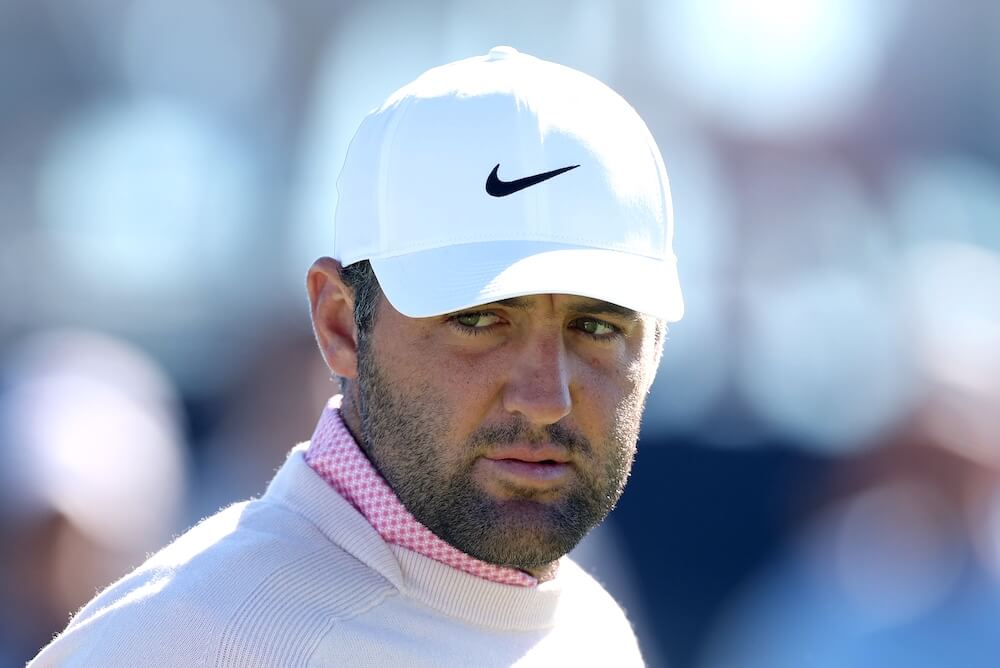
SOUTHAMPTON, NEW YORK | Like the summer wind that seems intent on blowing an inordinate amount of mischief into this U.S. Open at Shinnecock Hills, there is an inevitability to the attention focused on Scottie Scheffler as he takes his first feet-shuffling swing at completing the career Grand Slam this week.
Scheffler’s career – and particularly his last two-plus seasons – has reached the point where his achievements are measured on the scale of historical relevance, the outgrowth of his extended dominance.
Now, Scheffler finds himself in a similar position to where Rory McIlroy was 14 months ago when he arrived at the Masters, still chasing a green jacket. The difference is McIlroy had spent more than a decade chasing the final piece to his career slam while Scheffler is making his first effort to become just the seventh player to join the game’s most exclusive club.
Twelve players, including Scheffler, have won three of the four majors and only Jordan Spieth, who is missing a PGA Championship, is still in a position to do what Scheffler is attempting to do.

Consider Shinnecock Hills with its angles, its slopes and its other faith-sapping demands and it begs the question: Who is better prepared than Scheffler to handle what’s coming?
Which leads to the other question: how heavy is the burden of potential history on Scheffler this week?
“It’s kind of a funny thing. It’s like, yeah, if I win this tournament, that would be amazing, but I think then I show up the next week, and it’s like, OK, now Scottie’s won the Grand Slam, he’s won all these golf tournaments. Now where do we go from here?” Scheffler said in his pre-tournament question-and-answer session Tuesday afternoon.
“So no matter what, I think as a player and as a professional athlete, you’re never going to live up to the expectations of people. I think sometimes that’s a little bit of the fallacy in our sport is like, if I win the U.S. Open, then I’m going to be satisfied. I’ve won all the tournaments, and my career is essentially over, and I’ve accomplished everything I could want to accomplish. But I think the goal posts are always just moved further and further.”
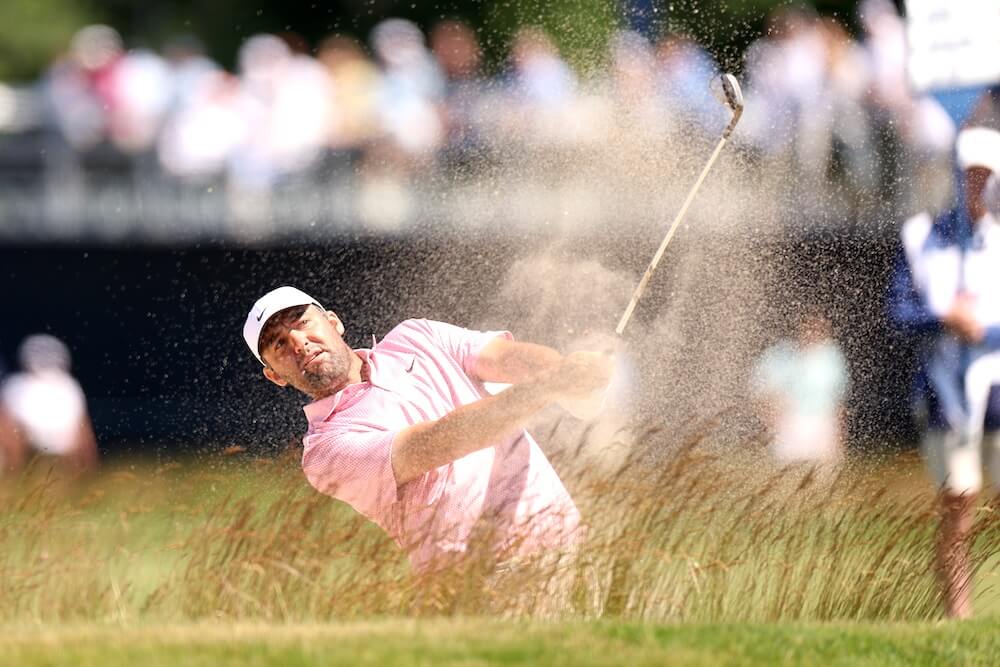
If you hear echoes of McIlroy in those words, it’s because they exist. When McIlroy finally won his first Masters last year, he felt adrift in the weeks and months afterward, searching for his professional purpose before realizing what Scheffler seems to have grasped – there are other mountains left to climb.
With 20 PGA Tour wins including four major championships, not to mention the third-longest uninterrupted run at No. 1 in the world – 161 consecutive weeks and counting – Scheffler has built a hall-of-fame career before his 30th birthday.
Among the things that separate Scheffler from virtually everyone is his perspective. He is driven by competition but, at least to hear him explain it, his goals are more holistic than check marks on a to-do list.
“For me, would it be a dream to win the U.S. Open? Of course. But at the end of the day … the Grand Slam has never been a motivating factor for me.” – Scottie Scheffler
“For me, would it be a dream to win the U.S. Open? Of course. But at the end of the day … the Grand Slam has never been a motivating factor for me. I always just wanted to be the best version of myself, and that got me this far,” Scheffler said.
“So when it comes to this golf tournament, like I said, I’m going to step on the first tee and remind myself I’ve done everything I possibly could in order to play well, and now it’s just a matter of going out there and trying to execute and kind of going back to enjoying the competition versus feeling like you have to win for some reason.”
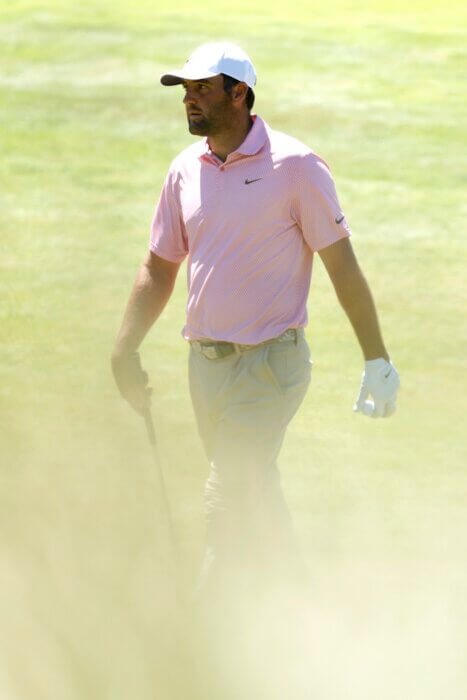
Scheffler is the favorite as this championship creeps toward its Thursday morning start despite a gentle undercurrent of questions about why he has just one victory this year – in January at the American Express.
He has reached the rare orbit where he is judged primarily against himself more than against others. Tiger Woods spent a career living with that. McIlroy understands it as well.
In 12 PGA Tour starts this year, Scheffler has a victory, three second-place finishes, seven top-five finishes and he leads the tour in strokes gained total as well as final-round scoring.
And still, there is a sense that something is slightly off, like a framed piece of art hanging almost imperceptibly askew. His first-round scoring average (69.92) is only 51st best on tour but the yellow highlighter lands on his proximity-to-the-hole stat where he ranks 128th on tour after leading that category last year.
It comes down to a little more than 5 feet per hole. Last year, Scheffler’s approach shots averaged 33.4 feet from the hole, this year the number is 38.8. It may be as simple as that.
“I’d say I feel like I’ve been close most of the year. I feel like I just haven’t been as sharp as I needed to be. I think the margins in this game are so small. For me to be winning a lot of tournaments, you’ve got to just be really, really sharp,” Scheffler said.
“I feel like I’m maybe leading the FedEx Cup [he’s second], I think I’m leading the strokes-gained statistics, so by no means is it a bad year. Is it up to the play I’ve had the previous couple of years? Probably not, but it’s not far off.”
With fairways averaging more than 45 yards in width to accommodate the crosswinds that tend to buffet this patch of rolling land located between the Great Peconic Bay and the Atlantic Ocean, Scheffler’s consistency could help neutralize the uncertainty created by the expected conditions.
Scheffler tied for 14th at the PGA Championship at Aronimink last month, ending a string of six consecutive top-seven finishes in majors. In his last five U.S. Open starts, Scheffler has finished T2, third and T7 twice, throwing out his T41 two years ago at Pinehurst, where he never seemed comfortable with the questions No. 2 was asking.
With fairways averaging more than 45 yards in width to accommodate the crosswinds that tend to buffet this patch of rolling land located between the Great Peconic Bay and the Atlantic Ocean, Scheffler’s consistency could help neutralize the uncertainty created by the expected conditions.
Just two weeks ago, however, Scheffler barked about the changing breezes at the Memorial Tournament and now he finds himself walking into the guaranteed gusts that will help define this championship.
“Golf is such a funny game,” Scheffler said. “A good example is this week, if I finish second this week, it’s almost like, hey, you failed in your first chance to win the career Grand Slam. It’s kind of, like, is finishing second a failure?
“Yeah, it can feel that way, but I think sometimes when you look at more of kind of a wider view of the sport and where your game’s at, second is not always that bad, but man, does it frickin’ hurt at the same time …
“But … if I was feeling so good about all my successes, I probably wouldn’t be too much fun to be around either.”