

The U.S. Open has never been a beauty pageant. The winner doesn’t lift the trophy because he’s popular. Fans don’t get to vote like it’s American Idol.
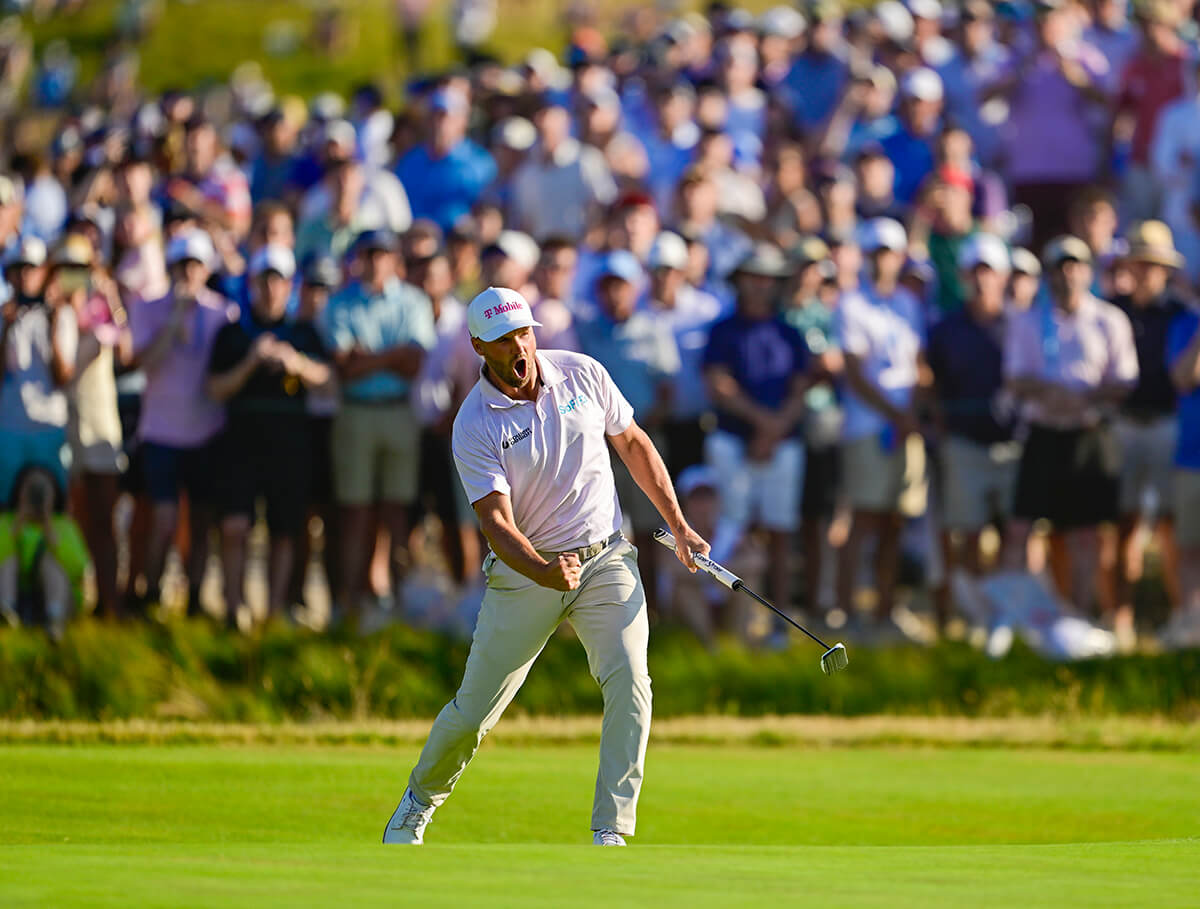
It’s a good thing for Wyndham Clark, who won a little bit ugly in what turned out to be hostile territory for him at Shinnecock Hills. Clark wasn’t at Bethpage last year to see how ugly New York fans can get, but he got a little taste of it on Sunday when he had to handle the crowd rooting for Scottie Scheffler or Sam Burns or Tom Kim or, well, anybody but Clark.
All that makes his wire-to-wire performance to claim a second U.S. Open trophy in four years more impressive. He took out crowd favorite Rory McIlroy in 2023 at Los Angeles Country Club and on Sunday faced down the people’s choice, Scheffler, who was chasing history of his own on his 30th birthday.
Clark earned it. And if he keeps performing at this rate and doesn’t backslide on his anger issues that turned fans off, maybe he’ll win a few hearts along the way.

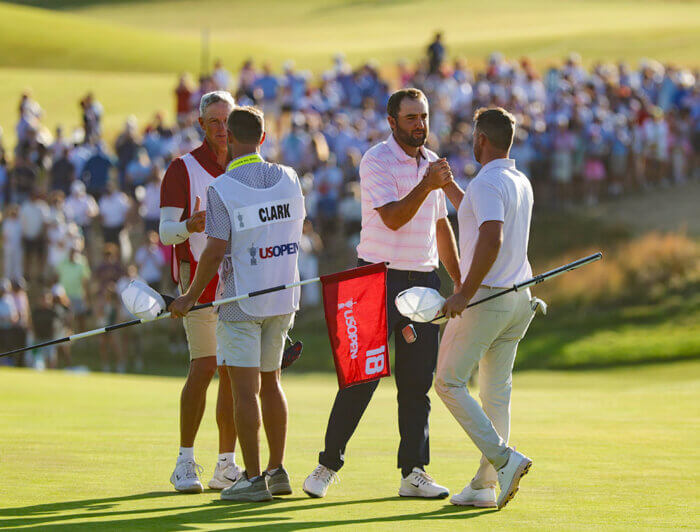
BOGEY: World No. 1. Scottie Scheffler failed to win the U.S. Open for the fifth consecutive year as the top-ranked player in the Official World Golf Ranking. Since the OWGR launched in 1986, the only player to win the U.S. Open while holding the No. 1 ranking is Tiger Woods, who did it three times (2000 Pebble Beach, 2002 Bethpage and 2008 Torrey Pines). Scheffler’s opening 72 was his 10th consecutive U.S. Open round without breaking par dating to the final round of the 2023 championship at LACC. His frustration was evident in an animated post-round range session with his coach, Randy Smith. He pulled out of that rut with 68-69 Friday and Saturday to play his way into the final pairing, but the hole was too deep and the putter wasn’t sharp enough to catch Clark.
BIRDIE: Double-digit rank. Each of the last five U.S. Opens has been won by a player ranked outside the top 10 in the OWGR at the time: Matt Fitzpatrick (18th in 2022), Wyndham Clark (32nd in 2023; 34th in 2026), Bryson DeChambeau (38th in 2024) and J.J. Spaun (25th in 2025). It is the longest such streak since the inception of the Official World Golf Ranking in 1986.
BOGEY: William Flynn. OK, just hear me out on this. Shinnecock Hills would be an even better golf course if original course designer Flynn had just switched the ninth and 18th greens. The fairways naturally merge at the bottom of the hill and it would be simple to cross them like sabers. That would make for a much more dramatic elevated finishing green directly underneath the iconic clubhouse. Perhaps the club can test it out one summer and implement it before the national championship returns in 2036. Just a thought.
BIRDIE: Sam Burns. It’s amazing how close we are to talking about Scottie’s best friend winning consecutive U.S. Opens. After his hopes as the 54-hole leader blew up after the late storm delay at Oakmont last year, Burns made a Sunday charge at Shinnecock with a 67 but his hopes slid away with two makeable birdie putts that didn’t fall on 17 and 18. He’s finished top 10 in three consecutive U.S. Opens.
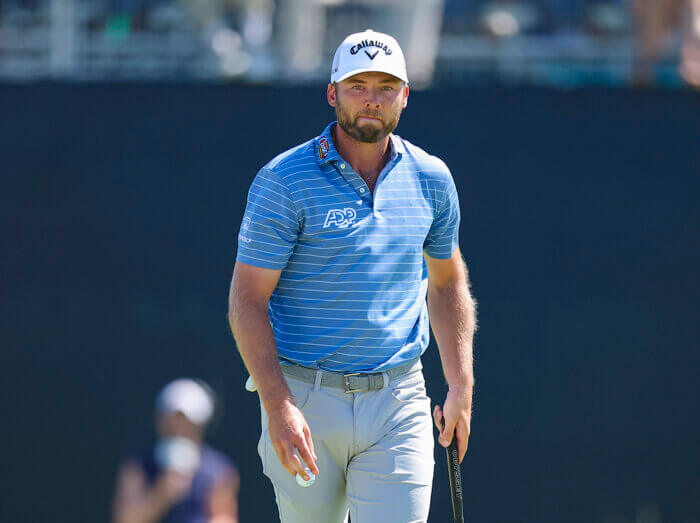
PAR: Xander Schauffele. There is no player more suitable for the U.S. Open stage than Schauffele. He sports the lowest championship scoring average (70.35 in 40 rounds) and has never finished worse than T14 in 10 career starts. His T11 didn’t boost his tally of seven top-10s in the U.S. Open to go with six more in nine Masters, yet he’s won both the PGA and Open in which his résumé is the least consistent (three top-10s in each). Go figure. One of these days, his consistency has to pay off with a win.
BOGEY-FREE TO MC: Jon Rahm. The Spaniard’s 2-under 68 opening round was the first without a bogey at Shinnecock since Phil Mickelson, Fred Funk and Daniel Chopra each posted clean sheets in the second round of the 2004 U.S. Open. In between, 711 scorecards had been turned in with at least one blemish on them. Unfortunately, Rahm’s second round included seven bogeys and a double – too many to keep playing the weekend. He’ll have a month off to stew about it before the Open.
SEPTUPLE BOGEY TO BIRDIE: Joaquin Niemann. The LIV star from Chile became the first victim of the major crackdown on conduct, receiving a two-stroke penalty for kicking up a fit and throwing a club on the sixth hole at the very end of a long first day. His actions – despite taking place in near darkness on an empty corner of the course with no cameras even watching – was determined to be serious misconduct under Rule 1.2b. Niemann’s frustration was understandable, as he lost two balls out of bounds off the tee and his temper boiled over after hitting his third tee ball into fescue and having to chop out after not getting requested relief from an anthill. The conduct penalty turned his 9 into an 11. He was even par before the meltdown. He bounced immediately back to shoot 65 to make the cut and eventually post a career-best T7 finish, just five behind the winner. Remarkable.
DOUBLE BOGEY: USGA conduct enforcement. There is no public footage of whatever Niemann did on the sixth hole to warrant being deemed “serious misconduct” and tournament officials offered no explanation for what made it egregious enough to slap something as significant as a two-stroke penalty on it. This lack of transparency raises serious doubts about the fairness and the consistency of enforcement. Now every angry outburst that doesn’t get penalized can fairly be deemed favoritism. Why didn’t Jon Rahm get dinged for kicking his driver around? Not every profanity or club slam deserves two strokes, but the USGA has opened up a whole new can of worms for an incident almost nobody saw.
DQ: Niemann’s caddie. The worst element of this story is the way Niemann’s caddie treated a reporter for The Athletic, Gabby Herzig, who had the temerity to interview an eyewitness – a volunteer who gave his name and spoke on the record – about what happened. When Herzig approached Diego Salinas for his side of the story, he reportedly berated her and called her “a clown” yet never once refuted any element of the account from the eyewitness. There should be zero tolerance for that kind of unprofessional behavior toward anyone doing their job at a golf tournament.
BIRDIE: Tom Kim. He also celebrated his birthday (his 24th) on Sunday and rekindled enthusiasm for his potential by matching the best U.S. Open finish by a South Korean. Y.E. Yang, the 2009 PGA champion, finished T3 in 2011 at Congressional Country Club. Kim finished runner-up in the 2023 Open Championship at Royal Liverpool.
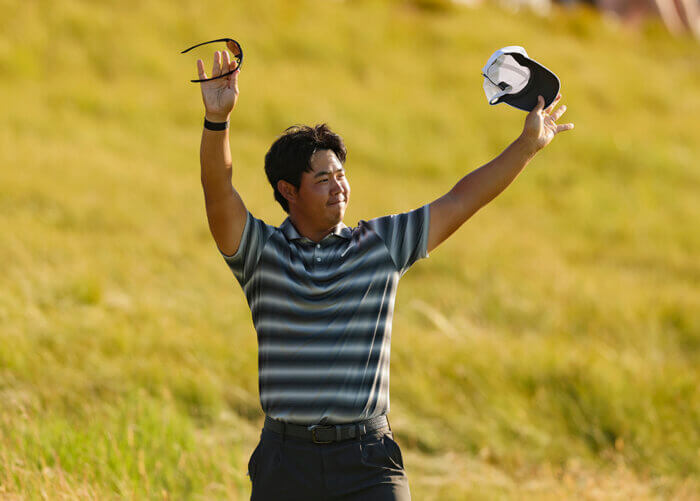
PAR: Keith Mitchell. In a way that’s never been done in 126 U.S. Opens, Mitchell shot an opening even-par 70 by going out the back side in 6-over 41 and coming home on the front in 6-under 29 – the first player in U.S. Open history to play one nine in the 20s and the other in the 40s in the same round. He is the second player to shoot 29 on one side during a U.S. Open at Shinnecock (Neal Lancaster in 1995). They both finished T4. Mitchell shot 70-70-70-70 to become the first player in U.S. Open history to post four rounds of even par.
BOGEY: Brooks Koepka. The winner at Shinnecock in 2018 seemed like a potential contender again in the early going. But he fell hard off the wrong side of the cut line fence he was straddling all day Friday, limping away with seven bogeys in his last 10 holes to emphatically check out. It gets harder to recognize the five-time major winner with each passing failure. He’s always thrived on perceived disrespect, so maybe this will motivate him.
BIRDIE: TaylorMade prototype. Using his new prototype TaylorMade Qi4D 200+ driver and a strong wind at his back, Bryson DeChambeau ripped his tee shot 427 yards down the 472-yard par-4 12th hole on Thursday, bounding across the road and to within 45 yards of the hole. That led to an easy bump to 6 feet and his first birdie of the championship.
TRIPLE BOGEY: Bryson DeChambeau. Not sure there is a more hit-or-miss star in golf than LIV’s YouTube sensation. He went from inside the top 10 late Thursday to missing his third straight major cut this year. In 11 majors since the start of 2024, DeChambeau has either finished top-10 (six times) or missed the cut (five). Fitting for such a polarizing figure.
EAGLE: Rory McIlroy. After hitting a wedge from 192 yards to 11 feet on the downwind par-5 fifth hole, McIlroy buried the putt for eagle that made him the first in the field to reach 3-under. It was the fourth eagle of McIlroy’s U.S. Open career, but the first one in 140 career par-5s played in the championship (his first three were all on par-4s). Despite a brief flurry of birdies early Saturday to get in the mix, McIlroy checked out with a back-nine 40 and ultimately finished a disappointing T32.
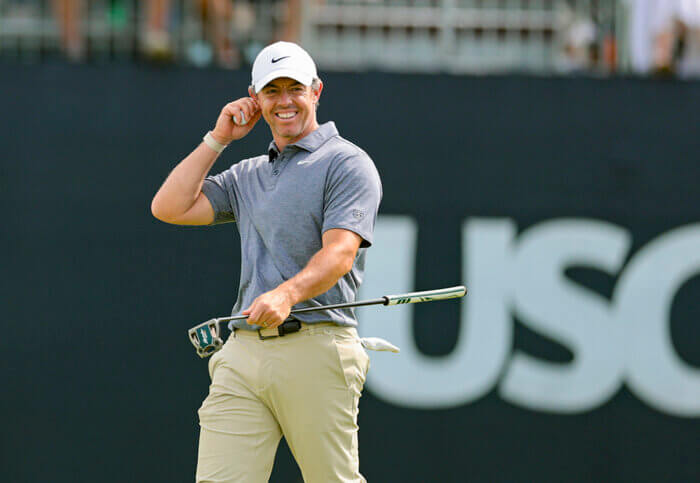
BOGEY: Attendance. Fans who made their way to the east end of Long Island might not have noticed considering the traffic, but not a single round was sold out. The USGA capped attendance at 30,000 a day, which is pretty boutique to begin with. The remote golf had competition from the World Cup and the Knicks victory parade, but it was still startling to see so many empty bleacher seats until it filled up Sunday.
DOUBLE BOGEY: Low energy. With so much critical play ending so late in the day, even New York crowds couldn’t muster enthusiasm or had long started treks home before the golf was over. The first two rounds are always long and late, even without two-hour morning fog delays. But Saturday’s 3:45 p.m. start for the leaders meant the last group was finishing at sunset with few watching. “It was kind of unfortunate that we’re finishing in the dark and people weren’t really out there because there were some obviously key, big moments, and it did kind of get a little flat,” said Clark, whose huge shot to set up the week’s only eagle on 16 drew tepid reaction. “Sometimes it made it tough to stay really focused because it seemed like everyone was leaving, and it was like the tournament was over.”
BIRDIE: Harry Higgs. Forrest Fezler famously stepped out of a porta potty and played the last hole of the 1983 U.S. Open donning shorts in protest to golf’s long-standing dress code. Higgs – who doffed his shirt on the rowdy 16th hole in Phoenix a few years ago – nearly made another fashion faux pas when he absent-mindedly showed up for the first round Thursday wearing shorts that are only allowed in practice rounds (and LIV). He had to borrow trousers before shooting 71. A day later he was on the leaderboard after a 68 and reminding everyone how likeable he is before a Saturday 77 pushed him back into the background and an eventual T43 finish.
BOGEY: J.J. Spaun. The defending champ’s hot finish at Oakmont turned into a cold open at Shinnecock. His 7-over 77 was the highest opening round at a U.S. Open by a defending champion since 2011 winner Rory McIlroy opened with a 7-over 77 in 2012 at The Olympic Club. Spaun’s the second straight reigning champ to miss the cut (DeChambeau flamed out early at Oakmont).
QUAD: Dylan Wu. NBC had already signed off when Wu held the fate of all the 4-overs in his hands late Friday when a closing birdie could have sent 12 players home. Instead, he made a 7-footer for par on 18 to be the last guy to make the cut. He was the first man on the course Saturday in howling winds and walked off the first green with an 8 after a five-putt – each of the last four putts inside of 4 feet. It was a quick message to the field that despite two soft first days, Shinnecock was getting its bite back.
PAR: Shinnecock. The USGA went soft on the setup and let Shinnecock be Shinnecock, and that’s good enough. It had its logistical challenges, but seeing that magnificent course test the world’s best players every 10 or so years is worth the trouble.
BIRDIE: Ryder Cowan. Just seven years ago, he finished runner-up at Augusta National. Not at the Masters but at the 2019 Drive, Chip & Putt National Finals in the 12-13 boys age group. The Oklahoma Sooner went out in 32 on Thursday to sit atop the leaderboard and was still tied for 11th through 36 holes. Five amateurs made the cut and Cowan shared the low amateur silver medal with golf’s most accomplished amateur, Jackson Koivun.
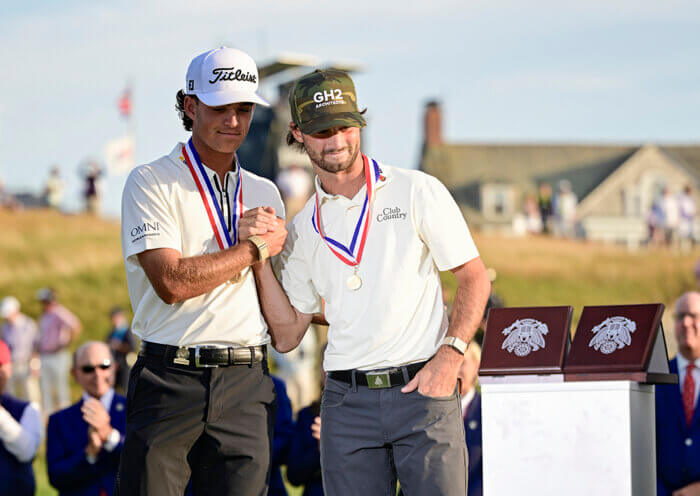
BIRDIE: The future. Both rounds on the weekend featured the world’s top-ranked amateur Koivun – in his final amateur start before taking up his PGA Tour card – and top-ranked junior Miles Russell playing together and looking very comfortable playing with the best golfers in the world. It won’t be the last time we see them together on a major stage when they’ll be even bigger parts of the conversation.
PAR: Dustin Johnson. Having repeatedly written DJ off, kudos to the 2016 U.S. Open champ at Oakmont making the most of the final year of his 10-year exemption. His first-round 66 included eight birdies, two bogeys and a double. It wasn’t entirely out of the blue – in 2018 at Shinnecock, Johnson was tied for the lead after the first round, held the outright lead after the second and was still tied for the lead after 54 holes. He ended up finishing in third place behind Brooks Koepka and Tommy Fleetwood. Unfortunately, DJ went from 4-under and in second place through 28 holes to 4-over and eking out a cut in five quick holes Friday. He finished T32 and, contrary to DeChambeau, has made the cut in all three majors.
BOGEY: Patrick Reed. We expected more than an unceremonious missed cut from the DP World Tour points leader who played in the final pairing at Shinnecock in 2018. Reed’s first-round hosel rocket from fescue on the right side of 14 to fescue on the left will be the enduring image of his 2026 performance. He can now focus on holding McIlroy off in the Race to Dubai before his pending PGA Tour return next season.
BOGEY: Australia. Of the eight countries with at least three players in the U.S. Open field, only Australia failed to get a single player through to the weekend going 0-5, including Jason Day’s injury WD. Not exactly the celebration they were hoping for with Adam Scott’s remarkable 100th consecutive major start. A 2-0 loss to Team USA in the World Cup didn’t make Australia’s week in America any better.