

SOUTHPORT, ENGLAND | Precisely at 6:35 on a sunlit morning in Lancashire, England, one of the longest days in golf began with the crack of clubface on a ball and a ripple of applause for Matthew Baldwin, a local golfer, whose tee shot had just got the 154th Open Championship underway.
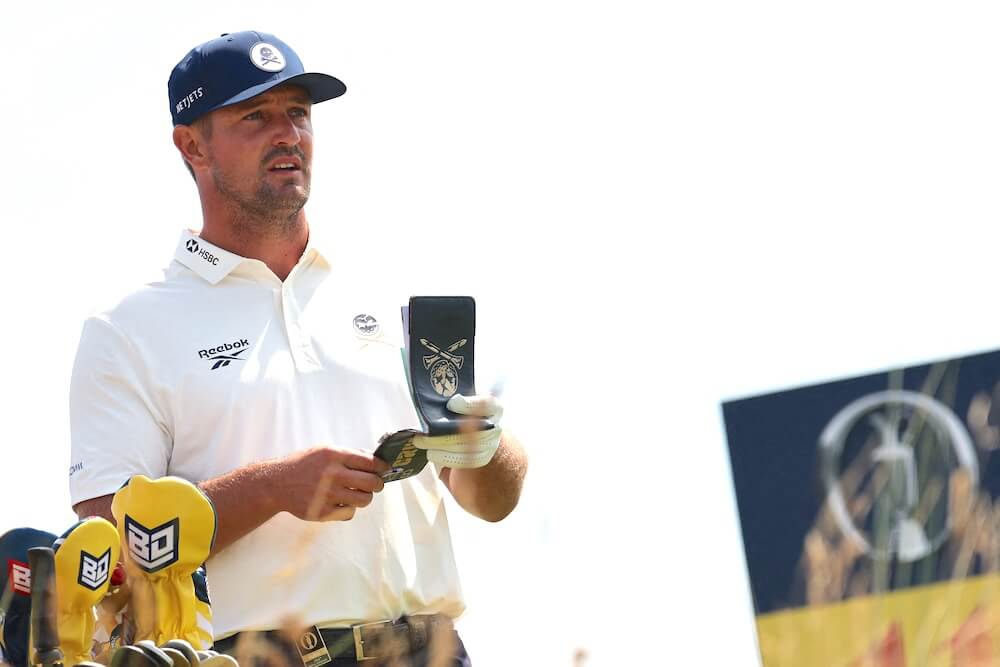
Hours later Bryson DeChambeau, Tyrrell Hatton and Scottie Scheffler and their caddies stood on the 10th tee at Royal Birkdale, talking good naturedly as if they were waiting for a taxi that was not due for another 10 minutes. Ringing the tee were thousands of spectators who had seen the men play the front nine of the first round of the final major championship of the year in a combined 7-under par and now were eager to see how the three men would fare on the back nine.
Hatton played first, using an iron on the 397-yard hole that doglegs sharply from right to left 300 or so yards from the tee. No sooner had he hit than his left arm shot out at right angles accompanied by a shout of “fore left.” His ball duly ended in light rough.
Scheffler hit next, the shaft of his club glinting in the sunshine. As he watched his ball anxiously he bent his body backwards so much you feared he might topple over and end on the green turf beneath his feet. All that body English could not stop the ball from rolling into a fairway bunker.
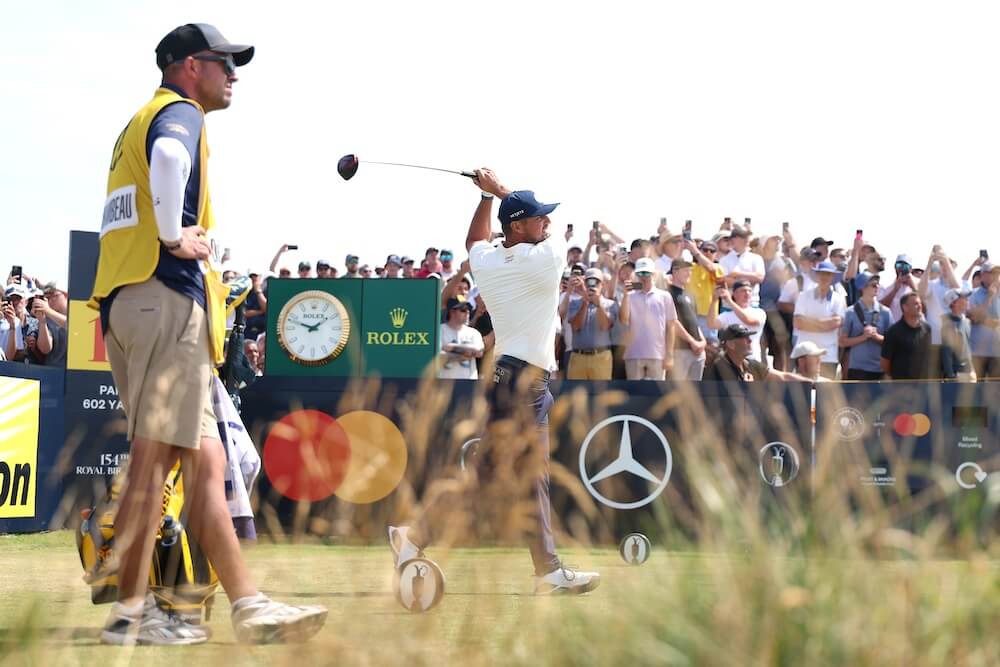
And then came a pause. Seconds passed, then minutes until a man in the middle of the fairway changed his flag from red to green, the sign that DeChambeau could attempt a drive over the corner of the dogleg and straight at a green that was now clear of players. Another crack, a long stare and DeChambeau’s ball soared over the sentinel dune and ended a few feet to the right of the putting surface, a blow estimated at 345 yards that set up a birdie.
Many golfers revere links golf that is played over treeless land that rises and falls, has sand beneath its springy turf and is caressed by a wind at some times and buffeted at others. Rarely does a wind not blow on a links course.
But how does one play a links course? There are days when it can seem as difficult as threading a needle while wearing ski gloves. Yardage books are as much use as a road map in a desert.
“I enjoy it when I’ve got a fight,” said Robert McIntyre, the Scot who shot 67 on Thursday. “I’m not just fighting the golf course, I’m fighting myself, fighting with Mike [Burrows, his caddie]. It’s a grind. [Royal Birkdale] is one of the hardest links courses I have ever played … ”
DeChambeau went at his task from the very start with the air of a man intent upon proving a point. He was desperate to consign the memory of poor performances at the three previous major championships, when he lasted only two rounds at each, to the margins.
How to defeat its challenges was the question many were asking themselves at the start of the week and though the overall scoring was good on a benign day of unbroken sunshine and with only a light breeze, some were still asking that question after they had completed their first round.
Justin Rose, for example, appeared completely puzzled by the course during his opening 75 though he had mastered it 28 years ago when as a 17-year-old amateur he finished fourth in this championship. Gary Woodland, the U.S. Open champion at linksy Pebble Beach in 2019, had a 78, 8-over par.
But DeChambeau’s round of 3-under 67 represented a substantial riposte to Sir Nick Faldo’s eve-of-championship criticism. DeChambeau had “zero clue of strategy” for links, Faldo said on SkySports television. “He [DeChambeau] said last year, ‘I’m going to go out and attack the links.’ Well I’ve never attacked a links. You thread it don’t you? … You don’t think, ‘Oh, I’ll blast it down there.’ … You’ve got to think, ‘How do I get it on the short grass.’”
DeChambeau went at his task from the very start with the air of a man intent upon proving a point. He was desperate to consign the memory of poor performances at the three previous major championships, when he lasted only two rounds at each, to the margins.
Thirty-six hole totals of 6-over par at the Masters, 7-over at the PGA and 5-over at the U.S. Open were Bad DeChambeau. His round on Thursday was Good DeChambeau. He still chose to demonstrate a whiff of immaturity, though, by refusing to speak to any of the gathered reporters as if displeased with the members of the Fourth Estate and talking to them he would somehow dispel the karma that had inspired him to such a good first round.
There was a slightly subdued atmosphere throughout the day as followers of England’s football team came to grips with the realisation that the previous night Argentina had knocked them out of the World Cup in a semifinal. There was an advantage for the R&A in this. There would be no need for the Open’s organisers to consider having to move forward the tee times for Sunday’s final round to accommodate those who wanted to watch England in the final of the World Cup.
DeChambeau probably didn’t give that thought much time in his head. He was focused on his task for the first day of this Open and having completed it successfully was looking forward to what he had to do on the second.