

LAHINCH, IRELAND | “What’s the date?” cried an English voice looking out towards Lahinch beach on Thursday afternoon.
“The third of September,” yelled his companion, who stood next to him battling to be heard above the wind.
“What did you say?” he bellowed back.
“THE THIRD OF SEPTEMBER!”
“Isn’t this still summer?!”
“WHAT?!”
“Never mind.”
The conversation might have been fruitless for the two men attempting to conduct it, but it was more or less clear to your correspondent because he was downwind and 30 yards away.
It was that kind of afternoon.

It was 4 p.m. but it could have been 9 p.m. The skies weren’t grey, they were inky black. The rain wasn’t falling, it was flying. At least one puddle was lifted from the walkway and flung across the car park in the rough direction of the golf course, more or less retaining its shape as it did so.
And then there were the waves.
They collided with the coastline with such force they were a danger to shipping yet there were folk out there surfing and swimming – and they were drier than those of us staring out at them.
“I don’t know what’s more ridiculous,” a Scotsman, sheltering behind a wall, said. “Bathing in this weather, in that sea, or trying to win a Walker Cup.”
Ah, yes – the golf.
“I don’t know what’s more ridiculous,” a Scotsman, sheltering behind a wall, said. “Bathing in this weather, in that sea, or trying to win a Walker Cup.”
The little matter of the finest amateur golfers from Great Britain and Ireland competing with their equivalents from the United States of America in the 51st Walker Cup at Lahinch Golf Club this weekend.
In previous encounters this week’s home team has claimed just nine victories and not one of them has come in the last five.
It is a chastening record and the task is made all the more intimidating by memories of the last match – 12 months ago at Cypress Point in California – when the result was in the balance at Sunday lunchtime only for the American team to overwhelm the visitors in the singles to complete a 17-9 rout.
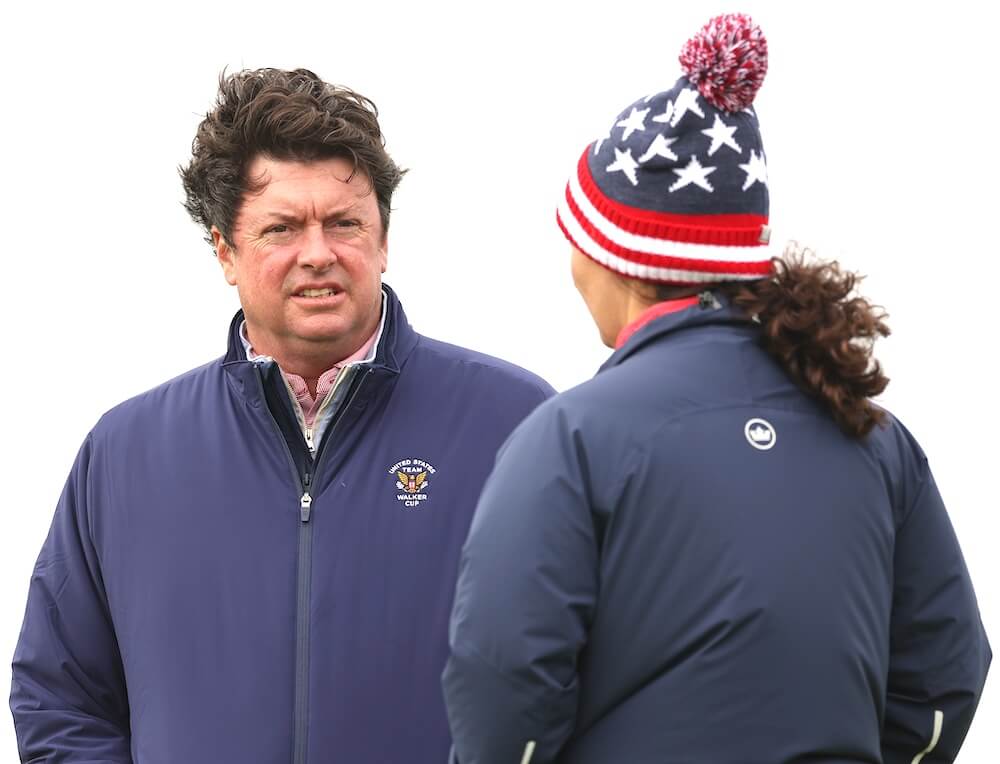
Under normal circumstances the GB&I captain Dean Robertson, who was also in charge last year, ought to be wary of the weekend.
That he’s not is explained by three factors.
The first is a more subtle reading of history because while there is no denying that the record books make for grim reading for locals, it is also a fact that GB&I have won four of the last seven Walker Cups played by the British or Irish seaside.
The second is the particular design of this week’s test.
Robertson knows that there is linksland and there is Lahinch’s linksland – a special plot of golfing heaven with a rich heritage.
It was soldiers from the British army who first ventured to County Clare in the 1890s in search of dunes that might reveal a golf course.
If there were a Venn diagram of elite championship links and mini golf courses then Lahinch would be alone within the intersection.
They alighted on Lahinch and instinctively knew they had discovered what they were searching for.
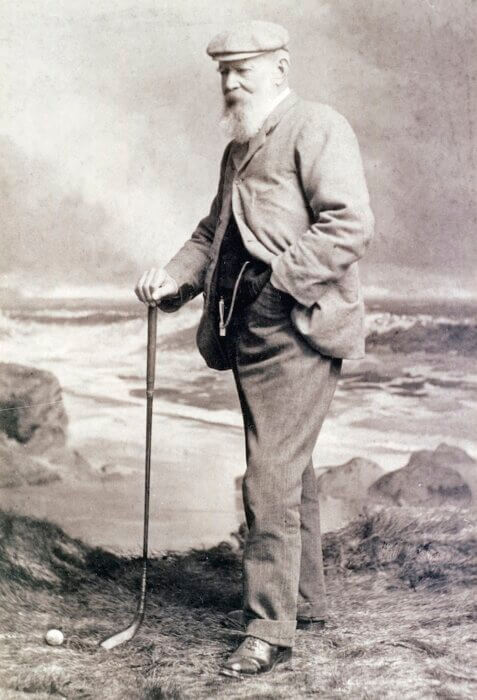
They employed Old Tom Morris to weave a path through the sandhills and he proclaimed it was, “the finest natural course I have ever seen.”
Few who have played the course since would argue with him.
It is, however, distinctive.
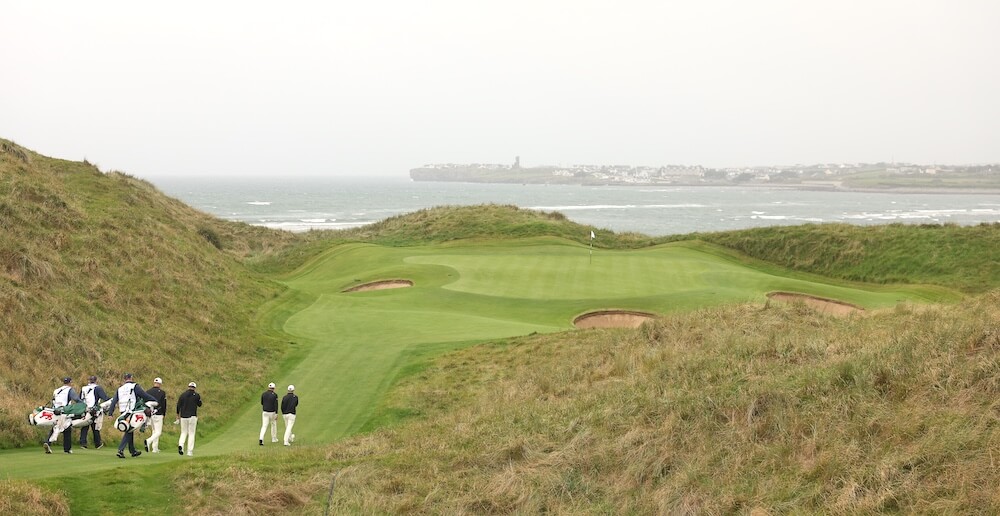
The fourth hole, for example, is named Klondyke after the hill that is sat plumb in the middle of the hole. A normal course would make its way around the hill. Lahinch goes right over the top of it.
The fifth is called Dell and has a blind green surrounded by three hillocks – the golfer takes aim at a white stone perched on top of the dune which blocks his view of the target.
If there were a Venn diagram of elite championship links and mini golf courses then Lahinch would be alone within the intersection.
Robertson knows that its idiosyncrasies offer hope to a team that was not only overpowered by American individualism at Cypress Point, but also flummoxed by conditions when the pressure was at its greatest – in particular the lightning-fast greens.
“Links golf is something we are far more comfortable with and also Lahinch is a masterpiece,” he said, before explaining why its nature so excites him.
“So many holes are framed by the dunes in a way entirely unlike any other, even among other great seaside courses.
“It’s not going to be overpowered. You’ve got to really understand the golf course. You don’t learn courses like this in a matter of a day or two. And if the wind quarters around, it just changes the whole examination completely.
“Every day you play Lahinch you learn more about it. Gaining course knowledge was the No. 1 priority for me.”
“We’re getting to see this course in really difficult conditions and that’s good. It requires ball flight control and it goes without saying that we’ve been working on that.” – GB&I captain Dean Robertson
With this in mind most of his team attended a training camp at the course earlier this season, while others played in the South of Ireland Championship here in July.
He also has, in the Irish 33-year-old Stuart Grehan, a veteran in Lahinch experience as well as in years.
“I’ve probably played here 30 or 40 times,” the County Louth member said Thursday. “I know the little subtle breaks so I’ve been trying to give my best advice to the team and we’ve had incredible prep so we’ll see how it goes.”
The third and final factor?
That weather.
Visitors might have been dumb (and numb) struck by the wind and the rain, but Robertson was smiling.
“We’re getting to see this course in really difficult conditions and that’s good,” he said. “It requires ball flight control and it goes without saying that we’ve been working on that.”
Proof of the severity of the climatic examination came at the 156-yard, par-3 11th on Thursday when the Americans Preston Stout, Ryder Cowan and Josiah Gilbert all took driver on a hole that demands taking a line on Newfoundland before letting a bit of cut and a gale do the rest.
Friday morning was drier, but the wind remained remarkable.
The weekend weather forecast is not so severe, but Sunday’s expected gusts should keep the smile on Robertson’s face.
In the village, locals hunched around a coffee stall talked of “putting up the bunting this afternoon – that’ll be some craic.”
At the course there were whispers that the afternoon opening ceremony might be cancelled. “Or at least relocated to County Mayo and not by design.”
The weekend weather forecast is not so severe, but Sunday’s expected gusts should keep the smile on Robertson’s face.
He knows that historically GB&I compete in the foursomes, but lose ground in the singles.
Moreover, whichever team wins the Sunday singles tends to win the Walker Cup – and Team USA has lost only 15 of its last 90 singles matches.
GB&I needs that wind to blow on the final afternoon to eke out every advantage they can get.
“Our big focus last year was creating momentum in foursomes play and getting a platform to kick on from,” Robertson explained. “We did that well, but we were outplayed in the singles. So a big focus and emphasis has been on the singles play for this year.
“We’re not neglecting the foursomes, but we are taking a leaf out of Luke Donald’s book and looking for momentum and fast starts. In training sessions I’ve integrated three-hole and six-hole matches. We’ll be set to start fast.”
The American team was hit by a stomach bug on Thursday which forced three players – William Jennings, Ethan Fang and Stout – to miss that evening’s banquet, but all were declared good to play on Friday morning.
The scene is set, sellout crowds of 8,000 per day are arriving, and expectations are high for a classic contest.
The hot air that typifies the lead-in to any team event has nearly run its course.
The cold air remains – and hopefully it will define the action.