

SANDWICH, ENGLAND | Located on the Kent coast in the southeastern corner of this country, Prince’s Golf Club is one of only 14 places ever to host the Open Championship. It also happens to be the least known of those venues and easily the most underappreciated. That is too bad, too, for Prince’s has become among the better places to play in this golf-mad land.
Part of that obscurity comes from having staged the Open on but one occasion, way back in 1932. It also has to do with being somewhat overshadowed by its neighbor, Royal St. George’s, which has held 15 Opens and remains firmly in that rota.
Another factor had to do with the original Prince’s course being destroyed during World War II by members of Britain’s Wiltshire Regiment, who used it for artillery practice and tank training while occupying the property. All that remained of the layout when they left were the outlines of 14 of its 18 greens, with news reports describing the rest of the course as “unrecognizable.” Eventually, Prince’s was rebuilt. But the track on which Gene Sarazen captured his sole Open Championship was gone. And rightly or wrongly, so was much of Prince’s cachet as a place for golf.
I first visited the Kent coast in 2013 and never set foot on Prince’s as I played multiple rounds at Royal St. George’s, also known as Sandwich due to it being located in this burg, and another track in the nearby town of Deal, Royal Cinque Ports, which has hosted a pair of Opens as well as three Amateur Championships.

But I did not make that same mistake when I returned last month to compete in a whimsical, one-day event called the Hagen 54 that entailed rounds at those three clubs. The tourney was inspired by an outing that tour professionals Walter Hagen and Jim Barnes embarked upon when they came here in the summer of 1920 before the Open was contested at Deal. And one day, they decided to play that trio of layouts, hopping fences and crossing roads as they did so.
“We did it for fun,” Hagen later wrote of that golf bender in his autobiography. And that was exactly my intention when I returned to the region. Only this time, I would be playing Prince’s, which had recently been revamped by Martin Ebert, the “it” architect in British Isles golf, and awarded the 2030 Walker Cup.
I fell hard for the layout, with its well-contoured fairways, greens of varying sizes and shapes, and devilish bunkering. The swaths of blond-brown field grass wowed me, too, as did the mix of holes. And I relished how the English Channel and the White Cliffs of Dover occasionally came into view.
I was also impressed by how well Prince’s held up with the better-known courses in Kent – and how it most definitely makes this area even more of a must-visit for those who fancy traditional, links-style golf.
Prince’s Golf Club was established in the early 1900s by Sir Harry Mallaby-Deeley, a successful London businessman and Member of Parliament, and his friend, Percy Montagu Lucas. They designed the course with help from Charles Hutchings, the 1902 Amateur champion, as well as architects John Low and Herbert Fowler, routing it on land they had received as a gift from the 8th Earl of Guilford.
The folks at the R&A certainly feel as strongly about the place, for they keep staging their tournaments at Prince’s, among them the Amateur Championship, which the club has co-hosted multiple times and the 2023 Women’s Amateur. And in four years’ time will come the Walker Cup.
Prince’s Golf Club was established in the early 1900s by Sir Harry Mallaby-Deeley, a successful London businessman and Member of Parliament, and his friend, Percy Montagu Lucas. They designed the course with help from Charles Hutchings, the 1902 Amateur champion, as well as architects John Low and Herbert Fowler, routing it on land they had received as a gift from the 8th Earl of Guilford. And they made it a long one, stretching the course to nearly 7,000 yards to counter the distances the new Haskell golf ball was traveling. Mallaby-Deeley served as Prince’s first president, while Lucas assumed the role of secretary. And former British Prime Minister Alfred Balfour drove the first ball in his role as captain when the course officially opened in June 1907.
As for the club’s appellation, that came from brothers George and James Prince, who owned and operated a pair of sporting clubs in London to which Sir Harry belonged and had provided seed money for the golf association in Kent that Mallaby-Deeley named after them.
A decade after Prince’s opened, England was fighting World War I, Balfour had begun a three-year stint as foreign secretary for the United Kingdom and members of the Argyll & Sutherland Highlanders, a kilted line infantry regiment, were occupying the club, using it mostly as a shooting range. Fortunately, many of the men were keen golfers, and they took care of the property, fencing off the greens and regularly mowing the playing areas.
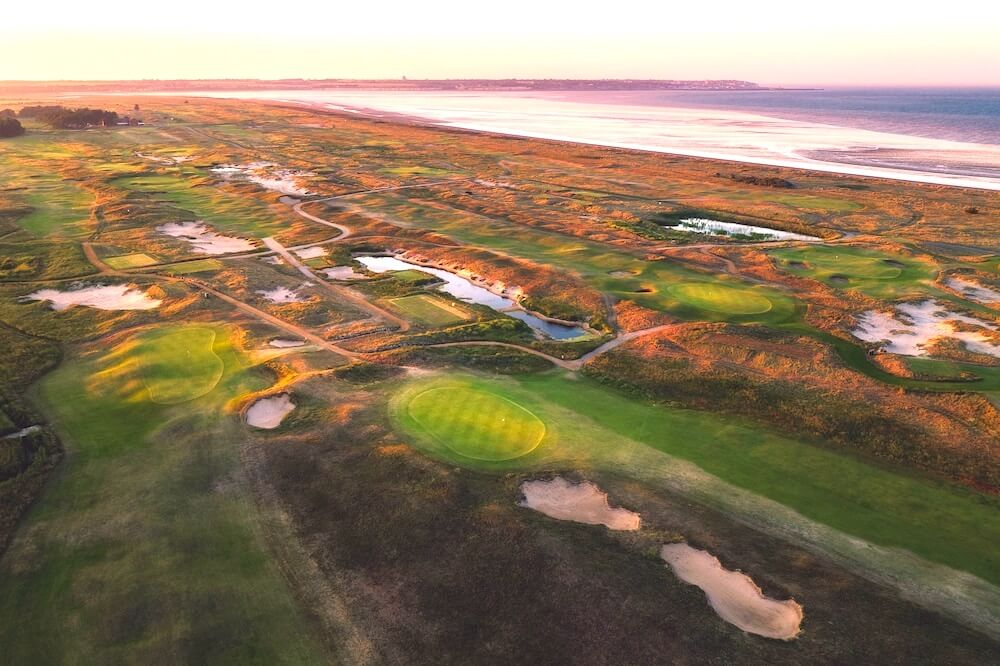
Nearly 14 years after World War I ended, Prince’s staged its one and only Open. And it was an historic one with Sarazen going wire-to-wire for the victory, prevailing by five shots. The key to the Squire’s triumph was his use for the first time of a sand wedge he had fashioned himself – and that made it much easier to escape the bunkers that gave Prince’s so much of its bite.
Prince’s fairly prospered in the years after that event. But then the Second World War broke out. This time, it was the Wiltshire Regiment that took over the club. And they apparently did not have much of an appreciation for golf, for the soldiers ravaged the grounds with their tank maneuvers and artillery practice. The one-time president of the English Golf Union, Lord Brabazon, quite accurately likened the latter of those actions to “throwing darts at a Rembrandt.” And matters were not helped by the German planes that dropped whatever bombs that remained after their air raids over London on places like Prince’s to lighten their loads before heading back across the English Channel.
As devastating a time as that was for the club, it did produce a local hero in Percy Belgrave “Laddie” Lucas. The son of one of Prince’s co-founders, Laddie was born and raised at the club and went on to become one of the best amateur golfers in the game, eventually playing in 1947 and 1949 Walker Cups, the last of which saw him also serve as captain of the Great Britain & Ireland squad.
Lucas joined the Royal Air Force shortly after the war started, in 1940, and quickly earned a reputation as a flying ace. One day, after his Spitfire was damaged in a dogfight over the English Channel, he coaxed his crippled aircraft back to Kent. Recognizing the clubhouse at Prince’s through the smoke that was starting to fill his cockpit, Lucas sought to set the plane down on his home track. His vision no doubt impaired, he missed several fairways before finally landing in a field that bordered the club. As soon as the British golf writer Henry Longhurst learned of the near-death experience, he fired off a telegram to his occasional golf partner, who was known for being somewhat wild off the tee. It read: “Lucas lands out of bounds again.”
The most important changes did not come until Ebert renovated the golf course, a project that began in 2017 and continued through 2022.
In addition to its golf course being wrecked during World War II, Prince’s saw nearly 40 percent of its members killed in action. And the club’s survival was very much in doubt. But along came an Australian steel magnate named Sir Aynsley Bridgland. He purchased Prince’s as well as Royal Cinque Ports. Soon after consummating that deal, the new owner asked architects Sir Guy Campbell and John Morrison to construct 27 new holes at Prince’s, being sure to incorporate the 14 original greens that had survived the war in the layout. Work on that project commenced in 1950, and the courses opened for play three years later.
Michael McGuirk purchased the club in the summer of 1975 and began making a series of improvements on the nearly 400-acre property. He built a more centrally located clubhouse and turned the old one, which bordered Royal St. George’s, into a lodge with 38 en-suite rooms as well as a bar and restaurant, an outdoor terrace and a museum-quality archive room called the Gallery.
The new owner also implemented a bunker restoration program that moved those hazards that were no longer in play for modern players into more strategic positions. At the same time, the club strove to improve overall course conditioning.
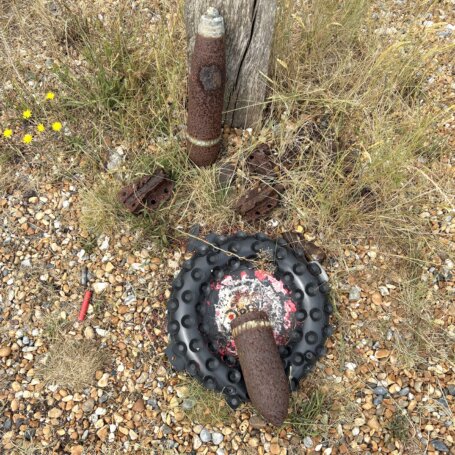
But the most important changes did not come until Ebert renovated the golf course, a project that began in 2017 and continued through 2022.
“My father and I gave Martin a pretty expansive list of what we wanted done,” said Rob McGuirk, Michael’s son and current general manager of Prince’s as well as a former tour professional. “It included adding two short par-3s, each of which faced the sea, and bringing water into view in other places whenever possible. We wanted to better vary the yardages of the six three-pars we had on the three nines, which were called Himalayas, Dunes and Shore, and break up the runway tees that Campbell and Morrison had built in the 1950s in favor smaller peninsula tees that gave us different and more interesting angles on those shots. And it was imperative to have at least one drivable par-4 on each of the nines and bring the greens and green surrounds back to their prewar size.”
In addition, the McGuirks asked Ebert to take down trees where he saw fit, largely to open up views. And the architect happily obliged, felling more than 400.
Beyond the pure design work, the family looked at ways to make Prince’s a more attractive place to play for local and visiting golfers as well as its 450-odd members. That included upgrading the practice facilities and adding Toptracer technology to the range and providing buggies for those who preferred to ride rather than walk. And in stark contrast to Royal St. George’s and Royal Cinque Ports, Prince’s allowed golfers to wear shorts without knee socks and play four-balls every day of the week as opposed to limiting it to just a couple, as was the tradition at those other places, which favored two-balls.
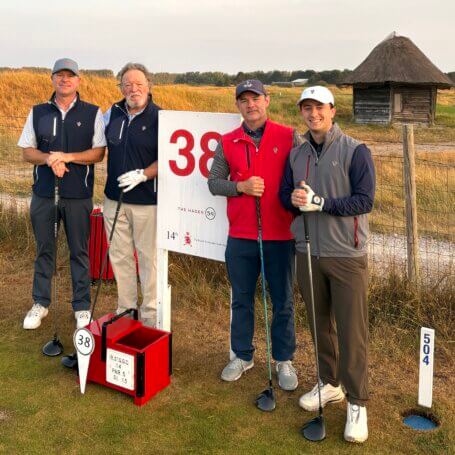
Having never played Prince’s before, I had no real frame of reference when it came to the changes that the McGuirks have made. But I truly enjoyed the way it played. And I appreciated just what a positive impact those changes have had. According to McGuirk, visitor rounds are up a third since 2017, and there is now a waiting list for membership. And the Hagen 54 appears to be a big hit after only its second playing this summer, giving golfers the chance to experience the remarkable golf in this region in a most interesting way by playing three Open courses on the same day and enjoying the hospitality of each club in the process.
There is also the Walker Cup, and in preparation for that, Prince’s has created in conjunction with Ebert and the R&A a new 18-hole composite course at the club that brings together the best holes from the three nines to be used for the 53rd playing of that match as well as any future championships that are contested at Prince’s.
The new loop is called, quite appropriately, the Laddie, and that appellation speaks to the rich history of the Kent coast club as well as its bright future as one of the truly great links layouts in England.
Anyone who overlooks it now will be making a very big mistake.