


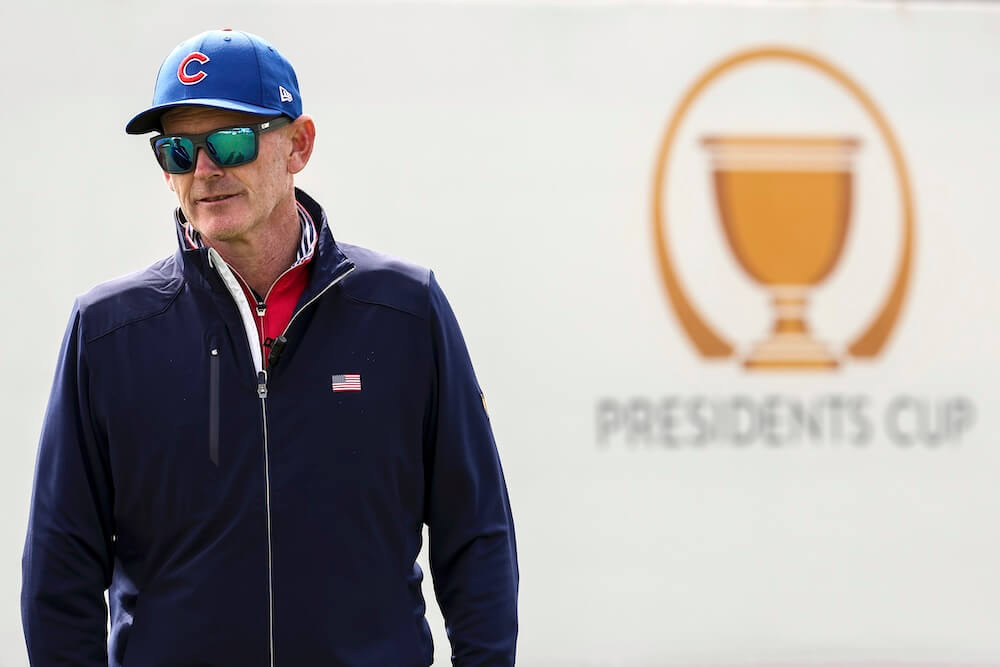
On the eve of another Presidents Cup, this one at redesigned Medinah Country Club on Chicago’s western edge, the sense of inevitability hangs in the early autumn air.
Given the historical record – the United States leads 13-1-1 all time and its only loss came 28 years ago and a hemisphere away in Australia – the narrative is as understandable as it is unavoidable.
Whereas seemingly every nuance related to the Ryder Cup is examined under an electron microscope, the Presidents Cup tends to operate on more of a broad brush perspective.
The closest thing to pre-event drama this year involves J.J. Spaun, which probably speaks volumes about the event itself.

Spaun was left off captain Brandt Snedeker’s 12-man American roster when he finalized his choices last month and the omission hardly rippled the Presidents Cup waters because Spaun – who ranked 10th on the points list – had withdrawn from the Tour Championship during the first round due to a shoulder issue. It seemed a logical reason to go in a different direction.
When Snedeker added Jacob Bridgeman and tour rookie Jackson Koivun, bypassing Spaun, Ryan Gerard and Akshay Bhatia among others, heads nodded in general agreement.
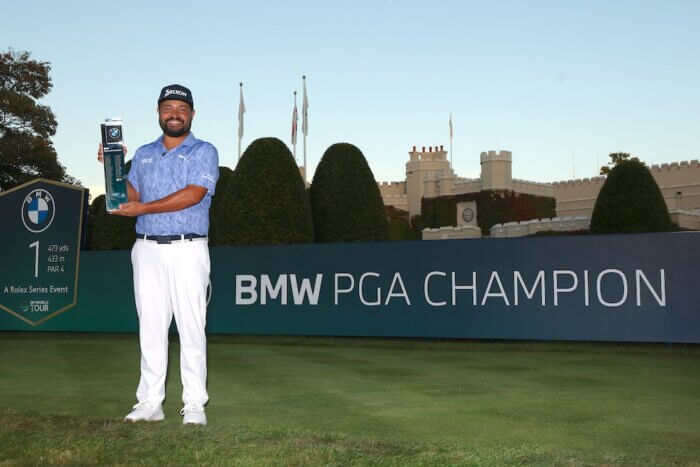
Then, Spaun won the BMW PGA Championship at Wentworth on Sunday, capturing the DP World Tour’s signature event against a star-heavy field, and admitted he felt slighted by being left off the U.S. Presidents Cup team. It sounded as if his feelings hurt more than his shoulder.
“Sneds called me Monday morning [after the Tour Championship], and I just landed in Phoenix. It was like a 45-second phone call. Just said I wasn’t on the team, and said I was the odd man out and I wished him luck and that was it,” Spaun said on Sunday.
“The best advice I got from all the captains I talked to and even coaches, you’ve got to trust your gut. … You’ve got to make those decisions.” – Brandt Snedeker
Snedeker knew the question was coming before it was asked in his first media session Tuesday at Medinah.
“The best advice I got from all the captains I talked to and even coaches, you’ve got to trust your gut. My gut was telling me one thing. You’ve got to make those decisions. It’s tough. I feel awful for J.J., and I always will, because he’s a great dude and I love the guy to death,” Snedeker said.
“That being said, he’s a competitor. Like I knew this was going to happen. I told all the guys that didn’t make the team, like your job is to go make me look like an idiot as quick as possible.
“So I fully expect Ryan Gerard, I fully expect Gary (Woodland) to win, fully expect Akshay, all these guys that were around the cusp of making this team to go out and make me look stupid.”
The burden on Snedeker, such as it is, will be to add another brick in the wall of invincibility the Americans have built in this event. That’s where one of the differences between the Presidents Cup and the Ryder Cup reveals itself.
In the Presidents Cup, the Americans play with freedom, assuming they will win. In the Ryder Cup, they tend to play not to lose. The difference is as clear as the respective records suggest.
“The foundation was set for me. I had a great blueprint to follow,” said Snedeker, a vice captain for Jim Furyk in the Montreal matches two years ago.
“I think having that consistency year to year has been really important, and it takes things off our plate. Our guys see the same people every year. They’re comfortable when they walk into a team room. They know what they’re getting into.”
“I think we’re kind of trying to hopefully be able to flip the pressure on the U.S. I feel like they’re expected to win, and if we can get on top early and create some pressure, there will be more pressure [coming] on them from other places and hopefully we can take advantage of that.” – Ryan Fox
For International captain Geoff Ogilvy and his players, the challenge is distinctly different. Beyond bringing together players from seven different countries, it is impossible to escape the history and the top-to-bottom strength of the American team.
Open Championship winner Ryan Fox is a 39-year-old Presidents Cup rookie and while he’s new to the team-room experience, he understood the storyline long before arriving in Chicago.
“We’ve always been the underdogs in this, but I feel like on paper the European Ryder Cup team is always the underdogs a little bit, and that hasn’t seemed to affect their results at all over the last few years. I think we’re trying to channel a little bit of that and come together,” the New Zealander said.
“I think we’re kind of trying to hopefully be able to flip the pressure on the U.S. I feel like they’re expected to win, and if we can get on top early and create some pressure, there will be more pressure [coming] on them from other places and hopefully we can take advantage of that.”
It is a familiar refrain. The question now is if the result on Sunday evening will be familiar as well.
© 2026 Global Golf Post LLC