


If getting a sense of LIV Golf’s future, if there is one, were as simple as reading tea leaves …
Instead, we are left to reading transcripts of bankruptcy proceedings, lawyer statements and social-media posts as LIV Golf lurches toward whatever the future holds for what is being pitched as a reimagined entity even if the league’s primary drawing cards – name-brand players – are evacuating as if the fire alarm has gone off.
If this is ultimately leading to the end of LIV, it’s not surprising that it is not as quick and clean as the Saudi Arabia Public Investment Fund’s sudden announcement earlier this year that the money hose had been turned off. Terminations invariably involve red tape and hurt feelings.
If this is a resurrection of sorts, those tend to be complicated as well.

What had been positioned as a line-in-the-sand day – Oct. 25, when players had to commit to playing in the league to assure its competitive solvency – came and went with barely a ripple. Elasticity is apparently part of the restructuring plan.
For a league that hasn’t held an event since August and does not have one scheduled in the future, LIV Golf – it’s somewhere between its 1.0 and 2.0 versions – continues to be a talking point in the game’s ecosystem, which it has desperately wanted to be a part of since its earth-shaking inception.
The Financial Times reported Sunday that about 15 players have tentatively committed to being part of LIV 2.0, with more expected to join, essentially assuring that the plan being funded by private-equity firm BC Partners will move forward. It is built around having enough players who will be offered equity in the league which is expected to have 10 events next year with significantly reduced prize money.
So far, Cameron Tringale, Richard Bland, Brendan Steele, Ben Campbell and Victor Perez have publicly pledged their futures to LIV. They are fine players but not exactly game changers.
The league has made no official comment on the 15-player report.
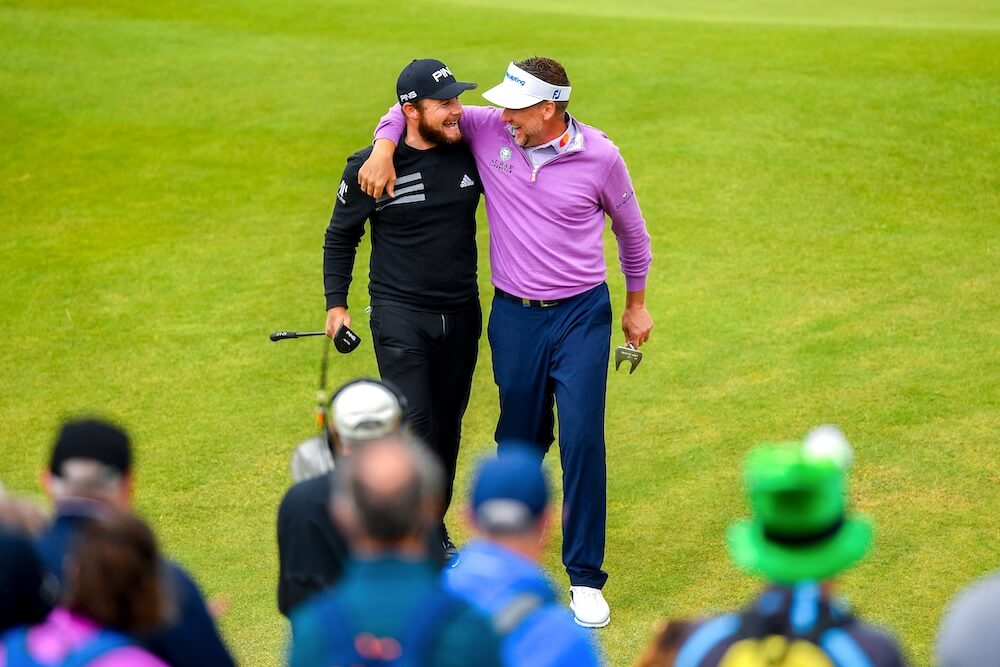
Sergio García has been freed by the bankruptcy court to leave LIV, while Jon Rahm’s separation agreement with the league is pending final court approval. Tyrrell Hatton, Ian Poulter, Tom McKibbin and Graeme McDowell have announced they will not return to LIV, finding new career paths.
The announcement on Monday that Mark King, the former president and CEO of TaylorMade Golf, has joined LIV as a senior advisor and will become chairman of the league’s advisory board if and when the new structure is finalized underpins the notion that the league believes in its future.
“Mark is a proven leader with an extraordinary track record of transforming businesses, building iconic brands, and creating community,” LIV Golf CEO Scott O’Neil said in a release. “His deep understanding and relationships in and around the professional golf industry, combined with his expertise in driving innovation and building high-performing organizations, makes him a valuable addition as an advisor to our team at this pivotal moment.”
From the outside, it looks like a cluttered mess.
Sergio García has been freed by the bankruptcy court to leave LIV, while Jon Rahm’s separation agreement with the league is pending final court approval. Tyrrell Hatton, Ian Poulter, Tom McKibbin and Graeme McDowell have announced they will not return to LIV, finding new career paths.
Meanwhile, Dustin Johnson – who may or may not be part of LIV’s tenuous future – is seeking what amounts to severance pay from the PIF, which evidently had not paid him all he was owed. Johnson is part of a group of players seeking such a resolution and, in a statement to The Athletic, his lawyer, David Cornwell, suggested his client’s future involvement may be dependent on such a resolution.
“The decision to release potential claims against the PIF and join LIV 2.0 will be influenced largely by how the PIF manages the wind-up of LIV 1.0,” Johnson said in a statement to the publication.
Recent bankruptcy proceedings revealed that league executives were paid millions of dollars while vendors and others are still owed millions. That’s the way bankruptcy tends to work but it’s a bad look that CEO Scott O’Neil was paid more than $13 million over the past year and other executives were paid well into seven figures over the same time period while vendors were left with their hands out.
If DeChambeau can use his will and his marketing clout to get LIV 2.0 off the ground, there may be something to its reimagined future, though on a significantly smaller scale than before.
The recent decision by the DP World Tour to exclude LIV players from its tour was a body blow to a league that needs every advantage it can muster to bolster its position. It’s questionable if the 2.0 model will be strong enough to qualify for world ranking points and without the crossover option, it’s understandable why some players who might otherwise be on the fence about continuing with LIV are saying farewell.
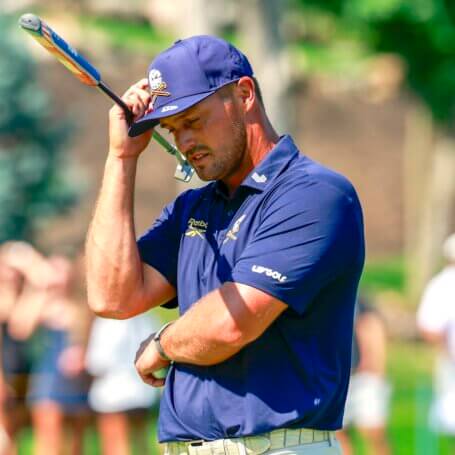
While all of this spins, the Bryson DeChambeau question hangs out there as perhaps the most important piece to the entire puzzle. If DeChambeau can use his will and his marketing clout to get LIV 2.0 off the ground, there may be something to its reimagined future, though on a significantly smaller scale than before.
But should DeChambeau decide it’s not worth the effort or he prefers yet another path, it could wind up being LIV 0.0.
As for the golf itself, that’s for another time. There’s too much else going on at the moment.