

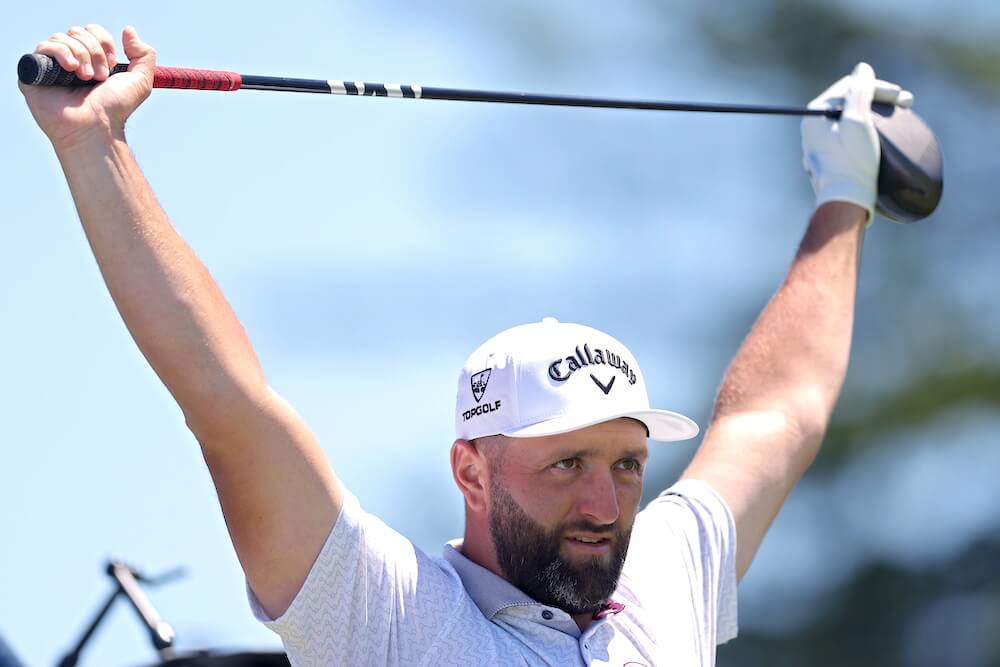
NEWTOWN SQUARE, PENNSYLVANIA | At age 31, Jon Rahm is just now edging into middle age in the competitive lifespan of professional golfers, younger by more than two years than Ben Hogan or Phil Mickelson when each of them won the first of their combined 15 major championships.
That suggests a wide horizon for Rahm as the PGA Championship arrives at Aronimink Golf Club, a suitably stylish and substantial test for the season’s second major championship.
Rahm has a decade of major-championship experience already, having won both the Masters and the U.S. Open while constructing a career that has placed him in the game’s highest orbit.
It’s too early to consider Rahm’s legacy, but there may be no other player whose career has taken a more profound detour than his since he joined LIV Golf in December 2023.

Mickelson blew up his image but, despite winning the 2021 PGA Championship as a 50-year-old, his playing bona fides were long established. Bryson DeChambeau has always preferred to color outside the lines and has always been more of an outlier than an insider.
Rahm’s story, however, is compelling not just because he chose to leave the PGA Tour but because of what it potentially means to his long-term place in the game.
A student of golf history, Rahm no doubt understands the ramifications of his abrupt turn away from the game’s establishment to join LIV’s rogue arrival after suggesting he wasn’t interested in the new league’s millions.
No matter how much success Rahm has on LIV – he has two wins, three seconds and two other top-10s in seven league starts this season – it is weeks like this one that come with a heavier weight of expectations. Winning in Hong Kong and Mexico City came with abundant rewards but the majors are what will ultimately define Rahm.
“I was never like thinking that I was going to be any sort of weight that would tip the scales to make things come together. … I never made a decision based on that.” – Jon Rahm
In that way, he’s no different than Brooks Koepka or Rory McIlroy or Scottie Scheffler, who are driven by the four weeks that matter more than any others. But the aftereffects of Rahm’s LIV decision have been impossible to outrun and they were exacerbated by his now-resolved standoff with the DP World Tour.
To no one’s surprise, Rahm’s career choice was at the center of his question-and-answer session with the media Tuesday morning, a subject drawing more acute interest given the recent announcement that Saudi Arabia’s Public Investment Fund will end its funding of LIV after this season.
Many believe that Rahm’s decision – worth a rumored $300 million – was influenced by the notion his defection would force a settlement of some kind between the PGA Tour and LIV. It didn’t happen and Rahm contends that was never part of his decision-making.
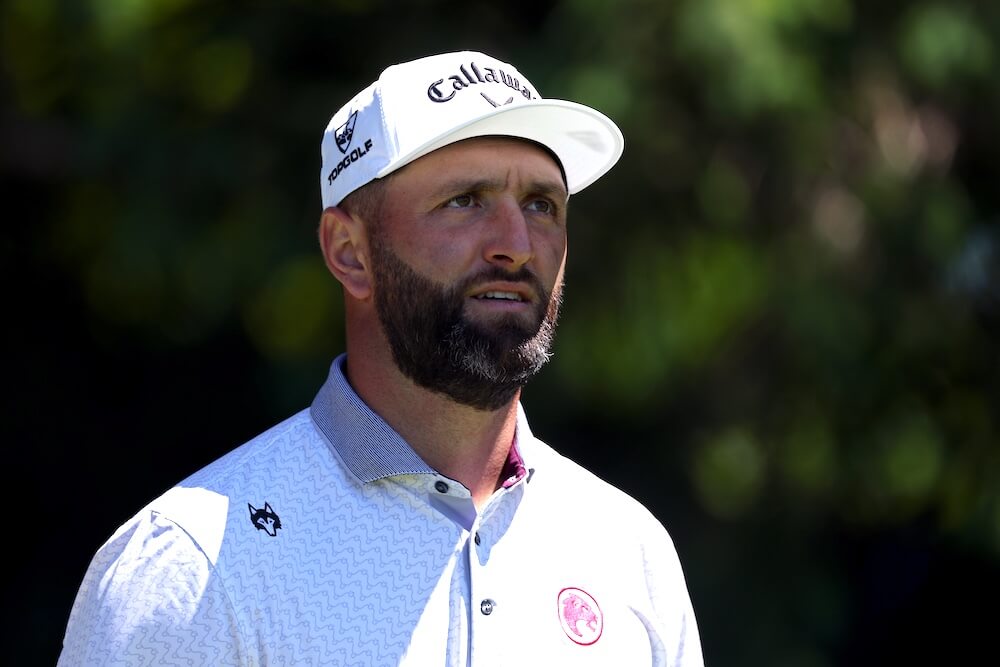
“I was never like thinking that I was going to be any sort of weight that would tip the scales to make things come together. That was never an argument in my mind,” Rahm said.
“I never made a decision based on that.”
Rahm said he doesn’t live his life reconsidering decisions he’s made.
“We all go back. We all think what could have been and what couldn’t have been. It’s inevitable,” Rahm said.
“If you made all the decisions – whatever decision you’ve made or choice is thought through and made for the reasons that you think are proper reasons, there’s no sense in dwelling on it. In fact, you shouldn’t really be unhappy about it. At least there’s nothing that you regret.
“If the terms change afterward, like it’s happened with LIV that things changed a little bit, it’s an afterthought, not a problem from the choice.”
Asked directly about what he has learned from his LIV decision, Rahm offered a similarly direct response.
“That is for me to know, and that’s about that,” he said.
Rahm has finished in the top eight in three of his last six major championship starts, including a T8 in the PGA Championship at Quail Hollow last year when he briefly shared the Sunday lead with eventual winner Scheffler on the back nine.
A week after being in the middle of a media storm swirling around LIV as it played an event in Virginia, the landscape is different at Aronimink. This week is about putting a name on the Wanamaker Trophy. The rest can be sorted out later.
He talked afterward about how much fun he had feeling the major championship heat despite his disappointing finish. As physically and technically gifted as Rahm is, emotion is a part of his competitive equation.
“It was really fun to be out there in the landscape nowadays in which as players in LIV we hear a lot of things from articles, from social media, from comments. While I understand why things are being said, it’s something you have to deal with,” Rahm said.
“To go on that Sunday playing against Scottie and to feel the support and love from the crowd is what made it really enjoyable. When I made that birdie putt on 11 and I hit those good shots on 12 and 13 and almost made the putt on 13, the support from the crowd and the cheering from the crowd was what made it so much fun.
“It was a realization of having such support from the crowd and playing good golf that made me realize in a way how I’m truly perceived from the public, as opposed to what I read sometimes.”
A week after being in the middle of a media storm swirling around LIV as it played an event in Virginia, the landscape is different at Aronimink. This week is about putting a name on the Wanamaker Trophy. The rest can be sorted out later.
“It is funny in a sport that we like to be in control so much, how little we are actually in control. Because once you hit the ball, that’s it. You’re in control of what you think, what you’re feeling,” Rahm said.
“For, essentially, a sport in which the result of the shot is pretty much completely deterministic to what we do, knowing that it’s our fault how much we deflect, at least I deflect, is just a funny irony within that of knowing that I’m in control; knowing that I’m the one doing things; how much I can deflect in the moment or that it wasn’t my fault because sometimes it’s just hard to accept that it’s your fault.
“So in that sense, yeah, you want to be in control, but I’m in control of my golf game. I’m not in control of everything else.”