

BLUFFTON, SOUTH CAROLINA | The first time Bill Coore wandered onto the southeastern reaches of Palmetto Bluff, he noticed something unusual in the woods.
It was an abandoned quarry, a scar left from another era on a sprawling piece of Lowcountry property that, at the time, was only beginning to contemplate what it might become. A previous ownership group considered building a golf course there, and Coore had been summoned to look at the land.
The course never happened.
Decades later, Coore returned. The quarry was still there, although time and nature had softened its edges. This time, he and longtime design partner Ben Crenshaw had the opportunity to build.
Anson Point, their new 18-hole course at Palmetto Bluff, opened in January. The old quarry remains part of it – an artifact from the property’s past incorporated into a golf course that, in many ways, points toward its future.

There is something wonderfully appropriate about that. Palmetto Bluff has never been a place in much of a hurry.
I first knew the property more than 25 years ago, when I lived in the Lowcountry and worked in golf media. Back then, the sheer scale of Palmetto Bluff was almost difficult to comprehend: approximately 20,000 acres tucked between Bluffton and the waterways leading toward Hilton Head Island and Savannah, Georgia, much of it forest, marsh and riverfront that had remained largely untouched for generations.
The development vision that emerged around the turn of the century was different from the golf communities proliferating elsewhere in the Southeast. Instead of building houses along every available fairway and waterfront, Palmetto Bluff would develop around compact villages separated by enormous stretches of natural landscape.
Wilson Village came first, a classically Lowcountry collection of homes and gathering places overlooking the May River. Moreland followed with a somewhat more contemporary, rustic personality. Anson, on Palmetto Bluff’s southeastern shore, will become the third and final core village.
Golf has evolved right alongside them.
Anson Point wasn’t simply a response to tee-sheet demand. Golf had been envisioned for this part of the property decades earlier, and the course would become the anchor for the long-planned Anson Village.
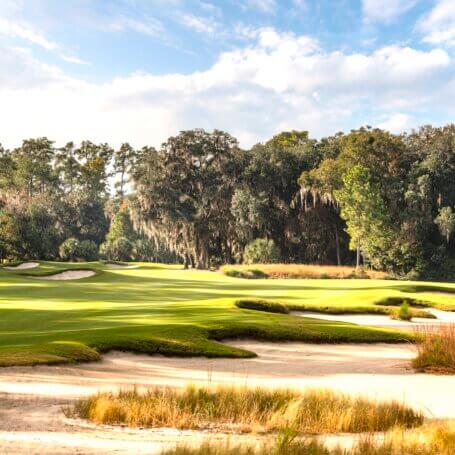
The Jack Nicklaus-designed May River Golf Course, which opened in 2005, was Palmetto Bluff’s original golf centerpiece. More than two decades later, King-Collins Golf Course Design added Crossroads, an imaginative, reversible nine-hole layout. And now Coore and Crenshaw have created Anson Point.
Three golf courses. Three very different experiences.
Together, they offer perhaps the clearest illustration of what Palmetto Bluff has become – and where it intends to go.
May River remains the most traditional of the three. Lush, meticulously maintained and framed by mature trees, water and marsh, Nicklaus’ course feels very much at home in the Lowcountry. Its green complexes demand precise approaches, and water comes into play far more frequently than on either of Palmetto Bluff’s newer courses.
Anson Point is almost its opposite.
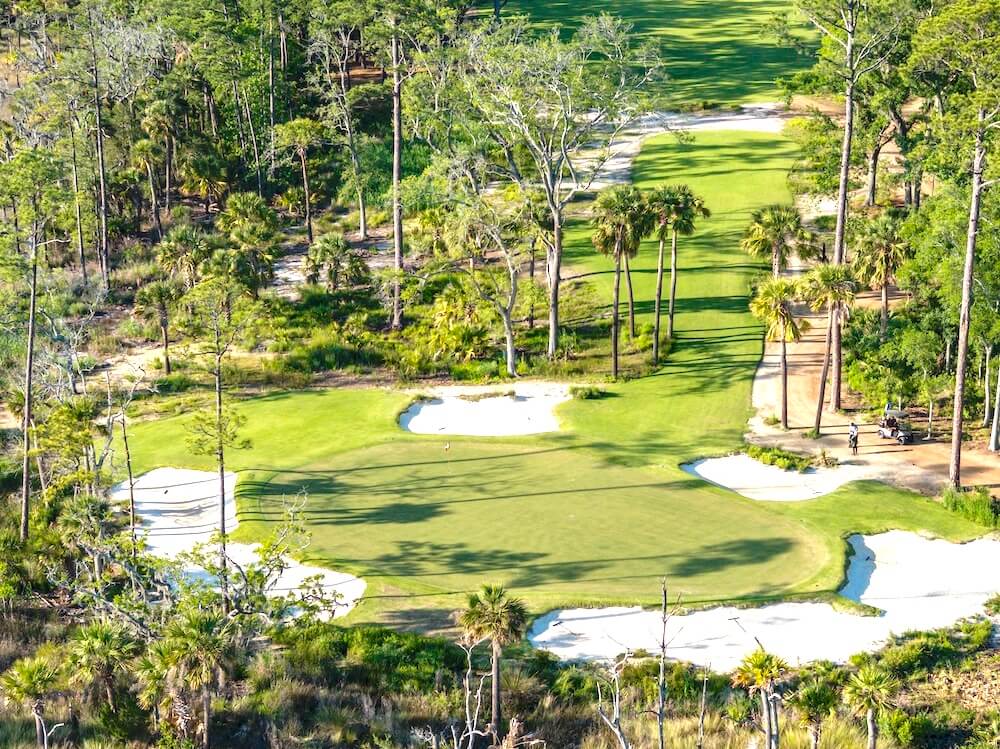
It is sandy and natural, winding through native pines and live oaks, with considerably less water in play. Zoysia fairways encourage firm-and-fast golf, while undulating greens and short-grass surrounds invite players to improvise.
“May River offers more challenges; Anson Point is more forgiving,” said Nick Lykens, Anson Point’s head golf professional. “With little water at Anson Point, players tend to keep more balls in their bags by the end of the day. The zoysia plays firm and fast, which rewards versatility around the greens and keeps scores moving in both directions.”
And then there is Crossroads.
Designed by Rob Collins and Tad King, the reversible nine occupies a mostly open, links-like landscape with very few trees. Generous corridors give players freedom from the tee, while putting surfaces averaging 6,000 square feet or more provide much of the strategic defense.
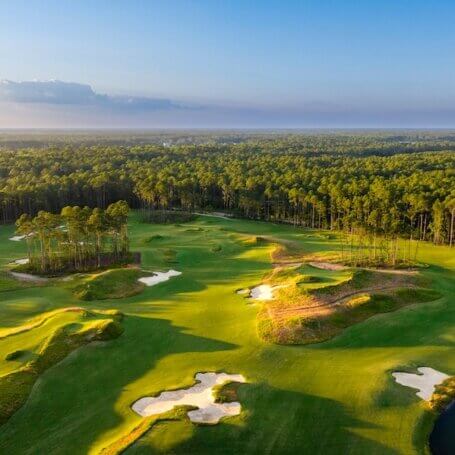
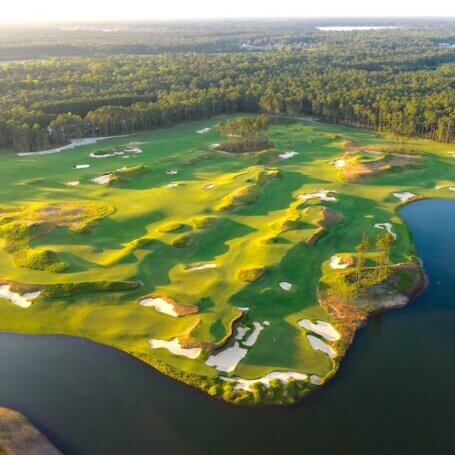
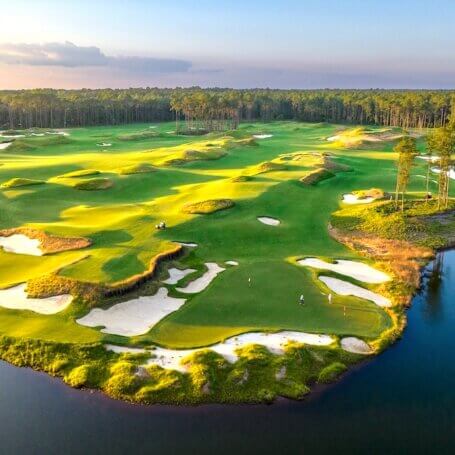
The reversible Crossroads course at Palmetto Bluff is a mostly open, links-like landscape with very few trees. (Click on photos to enlarge)
Crossroads can be played in opposite directions – its Hammer and Press routings – and was conceived to provide a highly walkable, social form of golf, particularly well suited to match play. Flexible tees, multiple flags and a sprawling practice and putting complex encourage players to make up their own games.
Lykens calls Crossroads its “own animal.”
That’s about right.
The three courses don’t feel like variations on a theme. They feel as though they belong to entirely different categories of golf.
That was intentional.
When private-equity firms Henderson Park Capital Partners and South Street Partners acquired Palmetto Bluff in June 2021, the pandemic golf boom was in full flight. Increased play had created considerable pressure on May River. Adding golf became one of the new ownership group’s early priorities.
Crossroads helped. Anson Point changed the equation again.
At Anson Point, ownership made a different wager: that proximity to an exceptional golf experience would enhance values throughout Palmetto Bluff rather than simply on a row of golf-front lots.
There was also an element of fortunate timing. Coore and Crenshaw unexpectedly had an opening in their famously crowded schedule, and Palmetto Bluff moved quickly.
But Anson Point wasn’t simply a response to tee-sheet demand. Golf had been envisioned for this part of the property decades earlier, and the course would become the anchor for the long-planned Anson Village.
What Coore and Crenshaw were given was extraordinary: approximately 500 dedicated acres and no requirement to thread golf through residential development.
Only about 80 acres are devoted to fairways, greens and bunkers. The rest largely remains natural. There are no homes lining the fairways and no premium lots carved into the routing.
That is a significant decision in the economics of golf development.
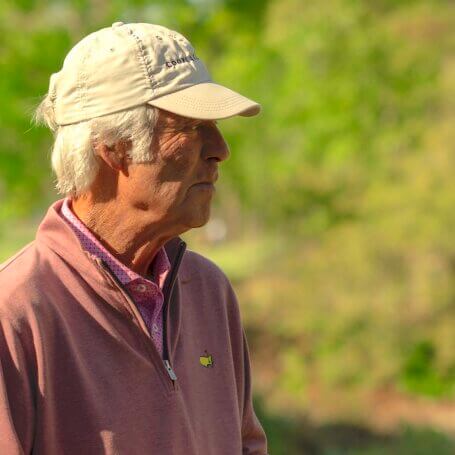

Ben Crenshaw (left) and Bill Coore, shown at Anson Point’s opening, had room to find golf rather than manufacture it.
For generations, golf courses within residential communities were often justified in part by the premiums developers could command for property directly overlooking them. At Anson Point, ownership made a different wager: that proximity to an exceptional golf experience would enhance values throughout Palmetto Bluff rather than simply on a row of golf-front lots.
It also gave Coore and Crenshaw room to find golf rather than manufacture it.
Anson Point moves through four distinct Lowcountry environments: upland pine terrain, maritime forest, live-oak groves and broad salt marshes punctuated by sabal palms. The Palmetto Bluff Conservancy manages surrounding native areas, including the use of prescribed burns.
The result is a course that feels considerably older than it is.
That same illusion exists throughout Palmetto Bluff.
The golf changes character as the land changes character, from pine to forest to live oak to marsh.
For much of the 20th century, substantial portions of the 20,000-acre property remained largely undeveloped. When modern planning began, developers worked with the newly created Palmetto Bluff Conservancy to establish a model that attempted to balance development with conservation.
Today, more than one-third of Palmetto Bluff is expected to be protected in perpetuity. Current ownership is also donating 20 acres, appraised this year at $8.7 million, to the Conservancy for a new campus that will include classrooms, exhibition space, a nature center and offices, along with additional trails.
There are smaller examples of that philosophy everywhere.
In Moreland Forest, homesites and setbacks are designed around specimen trees and existing root systems. Even dead trees can matter. The Conservancy practices “snag management” because more than 50 species use standing dead trees for habitat.
At Anson Point, the same philosophy plays out on a much larger canvas: 500 acres dedicated to a golf experience, only a fraction of which has actually been converted into maintained golf turf.
That doesn’t mean Palmetto Bluff isn’t growing. Quite the contrary.
The property is entitled for 4,000 dwelling units. Since Henderson Park and South Street Partners acquired it five years ago, they have invested $136.8 million through mid-June, including $65.2 million in amenities and nearly $30 million in lot development.
The real-estate numbers are equally striking. Median home values have increased from $2.1 million shortly after the 2021 acquisition to nearly $3.19 million in 2026. Median land values have climbed from $482,800 to $752,500. Through early September, 101 transactions totaling $213 million had closed this year – already exceeding all of 2025 in both transactions and sales volume.
Those numbers help explain why the distinction between growth and preservation matters so much here.
Palmetto Bluff’s greatest asset may ultimately be space.
It is a remarkably ambitious future for a place whose appeal is rooted largely in its ability to feel removed from everything else.
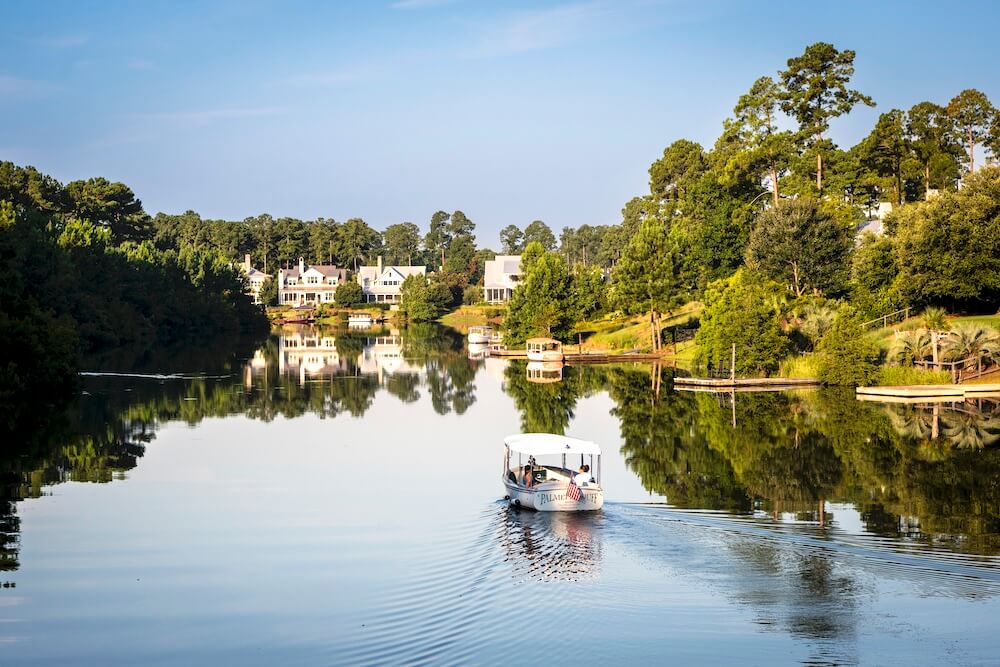
The next major expression of that balancing act will be Anson Village. A five-mile road and associated infrastructure required to reach it are underway and will take several years to complete. Plans call for a marina on the inland waterway, eventually allowing residents to travel by electric Duffy boat from Wilson Village to Anson, or head from the New River into surrounding creeks and waterways toward Savannah or Hilton Head.
It is a remarkably ambitious future for a place whose appeal is rooted largely in its ability to feel removed from everything else.
Golf has become part of the solution to that paradox rather than simply another amenity.
May River demonstrated that a first-rate golf course could live comfortably inside Palmetto Bluff’s Lowcountry landscape. Crossroads showed that golf didn’t have to be conventional – or even 18 holes – to become central to a club’s social life.
Anson Point takes the idea another step.
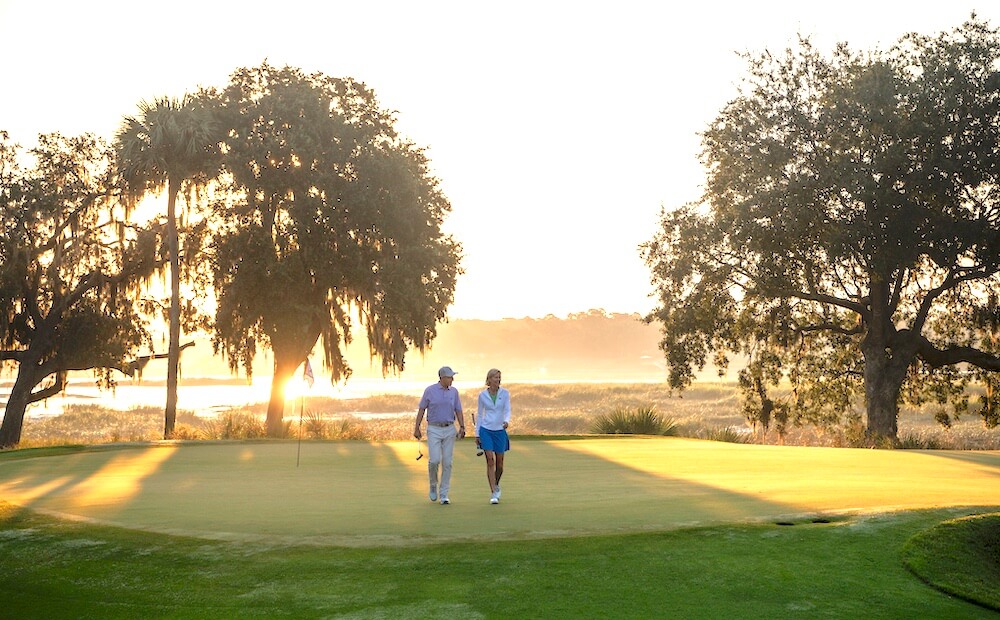
There are no houses peering onto its fairways. Much of its 500 acres will remain essentially as Coore and Crenshaw found it. The golf changes character as the land changes character, from pine to forest to live oak to marsh. And an abandoned quarry that caught Bill Coore’s eye decades ago remains there as a reminder that the best ideas sometimes require patience.
Twenty-five years after Palmetto Bluff’s modern story began, that may be the defining quality of the place.
May River was the opening statement. Crossroads expanded the possibilities.
Anson Point reveals the long game.