

SANFORD, NORTH CAROLINA | The first time I ever heard of a place called Tobacco Road was decades ago when I read a novel of that same name. Written by Erskine Caldwell, it told the story of dirt-poor Georgia sharecroppers scraping by during the Great Depression.
Around that same time, I also listened to Edgar Winter play and sing a song titled “Tobacco Road” during a set with his band in New York City, his voice dripping with such authentic despair that he might as well been lamenting his own miserable life and not that of man who wrote the lyrics, John D. Loudermilk:
“I was born in a bunk.
Mama died, and Daddy got drunk.
They left me here to die or grow
In the middle of Tobacco Road.”

So, you can understand why after learning in the late 1990s about a new golf course bearing that same appellation, I wondered what kind of pain it was designed to inflict. For the words “Tobacco Road” evoked nothing but the harshest sort of environment.
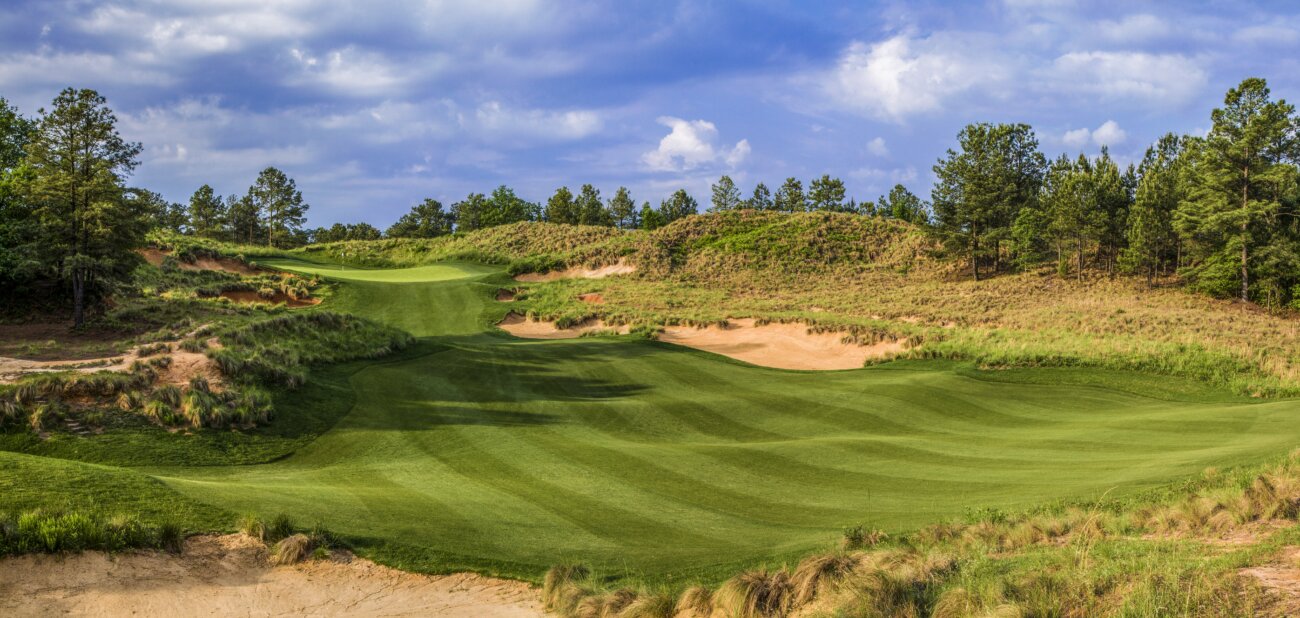
Early reviews of the layout, which opened in 1998, did not exactly dissuade me from having that opinion, for people complained voraciously about the blind shots and forced carries architect Mike Strantz had included on some of the holes. Others carped about the bunkering being off the wall in places and felt some of the greens had too many tiers and troughs. Some folks simply said the course was too hard and tricked up.
But in time, Tobacco Road developed a following, and the number of golfers who championed the track, which was routed across an old sand quarry outside this city some 50 miles southwest of Raleigh-Durham, started to exceed its critics. And by large margins.
The advocates praised the originality of Strantz’s creation and the different looks the bushy-haired Toledo, Ohio, native gave them during a round. They enjoyed how the architect, who had worked as an associate for Tom Fazio before starting Michael Strantz Studios in 1988, took golfers on all the rides when it came to hitting every club in their bags during a round – and using every shot in their repertoires.
[Visitors] spoke enthusiastically about how different intricacies of the course revealed themselves with each visit – and how that compelled them to keep coming back.
The comments I read about Tobacco Road certainly spoke to that transformation of public opinion. So did the endorsements that friends shared with me after they had teed it up here. They described the course as weird and wild. Funky and fun, too, but also grounded in the design principles of Golden Age architects such as Dr. Alister MacKenzie, whose work often inspired Strantz. And they spoke enthusiastically about how different intricacies of the course revealed themselves with each visit – and how that compelled them to keep coming back.
Along the way, I noticed that Tobacco Road started appearing on the most reputable top-100 lists of golf courses in America. Just 25 miles to the northeast of the historic Pinehurst village, it was also becoming an integral part of a proper golf trip to the Carolina sandhills.
My interest in this place was further piqued when Strantz died of tongue cancer in 2005, just 50 years young. Tall and mustachioed, he had produced only seven of his own courses after going solo. But what a body of work that was, with the first two of those, Caledonia Golf and Fish Club and True Blue, becoming institutions in the Myrtle Beach area and among the more acclaimed public-access tracks in the country.
Tobacco Road, which was Strantz’s fifth design, achieved even greater acclaim.
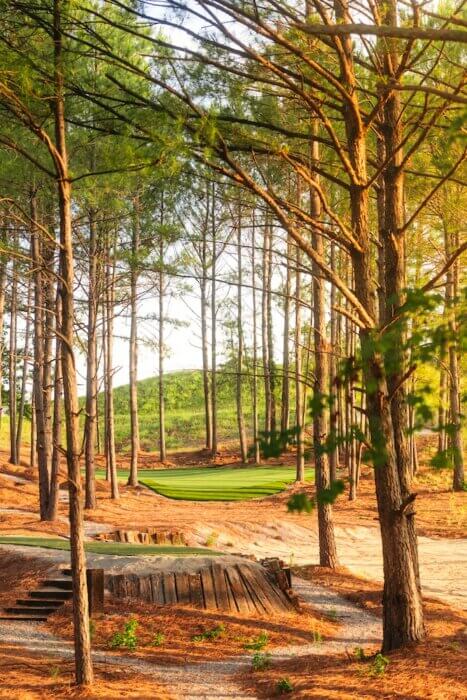
Together, those developments made me quite curious about the place. But it was not until this fall that I finally made it to Tobacco Road. The impetus for my trip was to attend the unveiling of a 12-hole short course on the property dubbed the Matchbox that co-owners Mark and Ruth Stewart had built amidst a 5½-acre grove of pines by the 12th hole of the original layout. Designed in part by Mark White, who was one of Strantz’s shapers back in the late 1990s, it rarely called for more than a wedge off the tees and boasted well-contoured, artificial greens and several testy bunkers.
To be sure, I was excited to check out the new track. But I was even more keen to see what Strantz had fashioned on the big course nearly 30 years ago and appreciate what all the hubbub has been about since it opened.
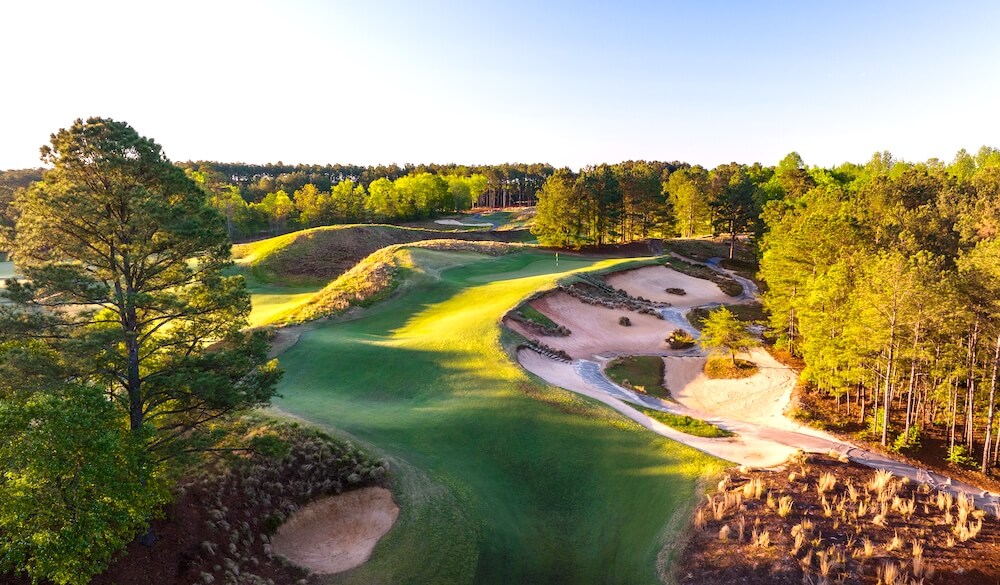
What struck me most about Tobacco Road as I surveyed the property upon my arrival was how much the rolling hills, stretches of woods and rugged expanses of sand made me think of Pine Valley. And Mike Keiser’s Dunes Club in New Buffalo, Michigan. But the wood-sided, tin-roofed clubhouse built in the style of the sort of structure where tobacco was once cured in these parts evoked a place much farther south. It also served as a reminder that the previous owners of this property had grown that crop here. Signs identifying the hole numbers dangling from plows at each tee spoke to its agricultural heritage, as did the use of implements traditionally employed in the farming of tobacco as tee markers. Those included rippers, discs, plows, points and cultivators.
For my round that afternoon, I played a combo course measuring a tad less than 6,100 yards that had me hitting from the discs on some holes and the plows on others.
As for the layout itself, I relished the MacKenzie-esque deception Strantz used when it came to the sandy waste areas along the fairways and by the greens, even though I let him fool me time and again into thinking those features were closer or farther away than they really were. I also appreciated how the designer gave golfers lots of room off the tees on the par-4s and par-5s while also tempting us to take more risks than we really should. Such as on the short par-4 fifth hole that plays slightly uphill and doglegs to the left. There is plenty of fairway on the right side but a massive sandy waste area running up the left that frequently leads even the most sober soul to cut it a bit close. But if you miss and end up in the sand, which is treated as waste areas throughout the course and not raked regularly, it is a lot harder making it onto the green in two than it would otherwise be from the fairway.
The par-5 11th has a similar feel and offers a comparable challenge, bending as it does around a gaping sand pit the whole length of the hole. But in this case, it doglegs to the right.
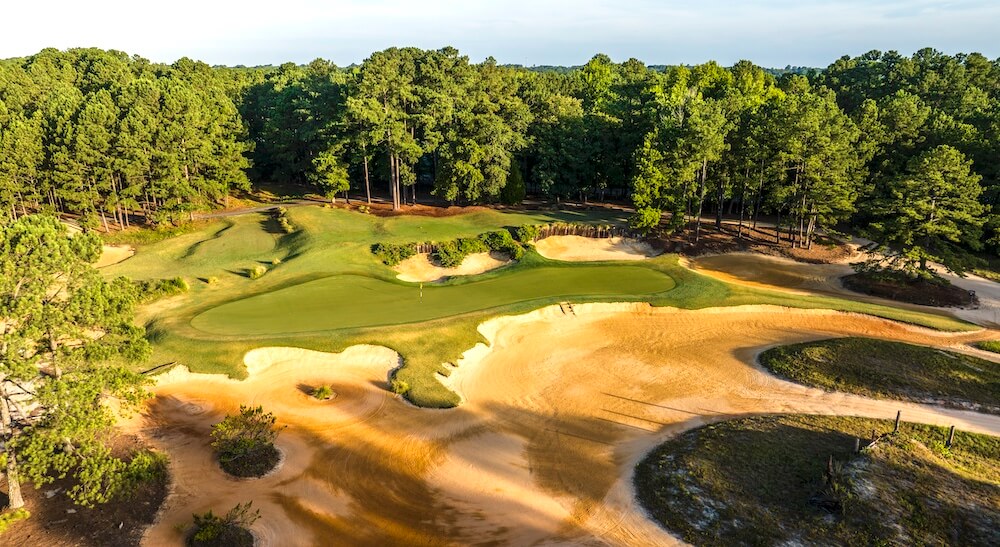
I relished how Strantz tested me with shots like the semi-blind, uphill approach to the narrow Dell-like green on the par-5 13th, which felt like another nod to MacKenzie for the iconic hole of that same name he crafted at Lahinch in Ireland. It is a blind and slightly nerve-wracking play, even with only a wedge in your hand. But the sense of accomplishment when you pull it off is more than satisfying.
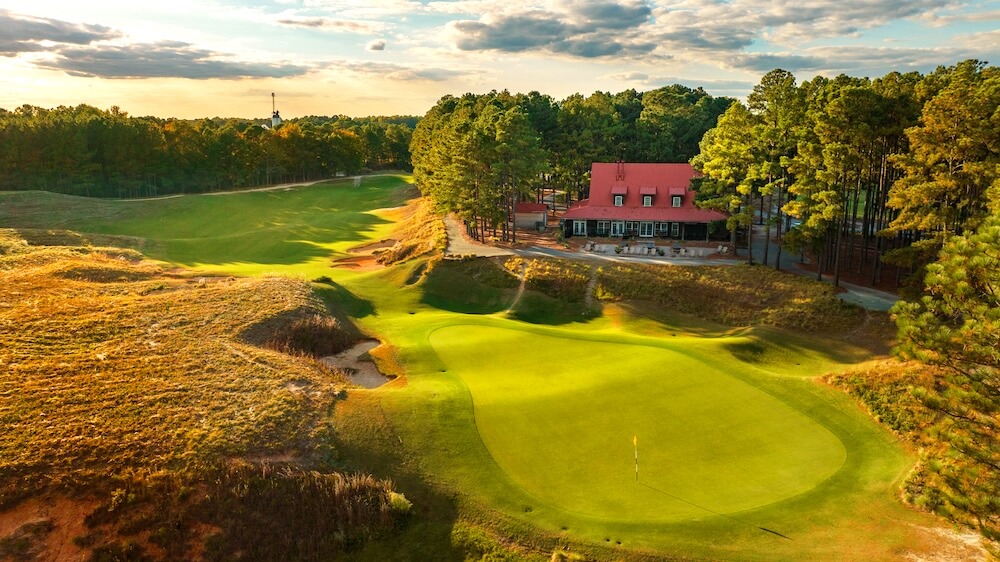
So is finishing strong on what is a very strong finisher in No. 18, an uphill par-4 that measured 369 yards from my markers but played longer and harder. For starters, golfers need to clear a gaping quarry that runs slightly uphill with their drives and then hit a raised green with another semi-blind approach shot, with the clubhouse visible amongst the pines on the left.
The day after my round on the original track – and a few hours after I had enjoyed a much more low-key loop around the Matchbox – I caught up with the 62-year-old Mark Stewart, talking at a table set in the shade of the pines that rose around the small wood clubhouse by the opening and finishing holes of the new course and savoring the aromas drifting from the food truck feeding folks who had finished their rounds.
First, we talked about how his family found their way into the golf business.
“As we did our due diligence, we heard a lot about Mike Strantz … And we asked him if he’d consider looking at our land.” – Mark Stewart
“We started thinking about it back in the 1990s,” said Stewart, whose father, Roy, served several terms as mayor of Sanford while also running a construction company that built roads and paved highways all over North Carolina. “We were golfers. We had this property from which we mined the sand we used in the asphalt mix for those roads. And we had the equipment to build a golf course.
“We also had the Tiger Woods effect, as he just coming on the scene. The company was doing well, and so was the economy. So, we decided to do it.”
One of the first orders of business was deciding on an architect.
“As we did our due diligence on that, we heard a lot about Mike Strantz,” said Stewart. “And we asked him if he’d consider looking at our land. He was living in Mount Pleasant, South Carolina, at the time and not really interested in traveling very much. But then he came up to see the property and liked what he saw enough to take the job.”
All these years later, Stewart still marvels at what Strantz created.
“Mike was something special,” he said. “He moved the architectural world forward by challenging a lot of preconceptions and breaking some rules. And I believe that he inspired a whole generation of course architects to look at things differently.”
Tobacco Road is certainly different, and it has been an unmitigated success, exceeding in Stewart’s own words “every possible expectation.”
“It’s a one-of-a-kind golf experience,” he added.
I cannot disagree with that assessment, or the fact that the words Tobacco Road now have very positive connotations for me.