

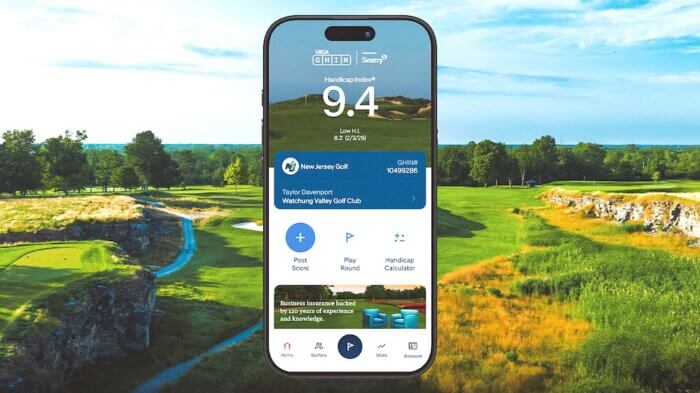
The Golf Handicap and Information Network, widely known as GHIN, has come a long way since it was created in 1981. Some might remember a time when golf clubs mailed golfers’ scorecards overnight to the USGA and the USGA sent back the calculated handicaps. Others will remember entering scores into kiosks at pro shops and getting back printed handicap cards in the early 2000s.
Then in 2012, GHIN launched its first mobile app, an opportunity for golfers to post their scores and see their handicap indexes in their pocket. As golf grew so did the app. It added new features, but the masses continued to view it as primarily a score-posting tool. When Tom Padula, now managing director of GHIN, joined the USGA in 2023, he decided that needed to change.
“We want to move to more of a playing companion,” Padula said. “For the app to be something you think about using before the round, during the round and after the round.”
On Monday, GHIN released its redesigned, updated GHIN app with this goal in mind. While features such as stats and GPS existed before, they’ve been revamped and modernized for accessibility. Now, golfers can preview a course or set up a game with friends before the round, utilize GPS and scoring during the round, and analyze the data to prepare for next time after the round.

“We really started with our grounding principle which is, ‘We serve golfers,’” Padula said. “We made sure that when we started this project we listened to what golfers actually wanted and were looking for in GHIN.”
In many ways, the update was about uncovering what was hidden, especially when it comes to stats.
“To be honest, in what is soon to be the legacy app, we just didn’t showcase it very well,” Padula said. “Some of it was in there, some of it was extremely buried. Really the first task for this new app was surfacing all of that really good data that we have in just a more modern way with charts and graphs and data visualizations that make it easily discoverable for golfers and more easy to gain insights into their game.”
If players put their hole-by-hole stats into the app, they will be able to track things such as average bogeys and birdies made during a round, driving accuracy, greens in regulation and more.
“One of my favorite features is there’s a new courses tab that allows you to actually look at the golf courses that you play often and see your scoring average per hole for that specific course,” Padula said. “That actually existed in the previous app but it was so buried nobody knew.”
According to the National Golf Foundation, there are 15 million golfers in the United States who play eight or more rounds a year. Tom Padula says in 2025, 2.91 million golfers posted scores through GHIN, so why not aim for 10 million in the next few years?
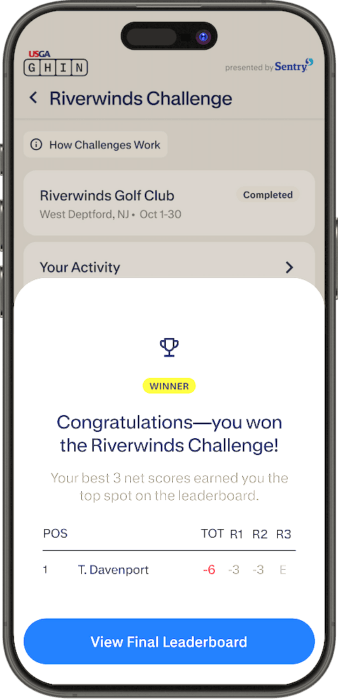
But it’s more than just stats. Padula says the new app will bring more players to GHIN Challenges. Soft launched last year, GHIN Challenges allows for Allied Golf Associations to set up net competitions at courses in their jurisdiction. Once set up, all players have to do is log three scores on a particular course over a selected period of time and they can compare their net scores to other participating players on a leaderboard. According to the USGA, at the time of the app update, more than 750 challenges have been created and more than 30,000 golfers have participated.
GHIN Challenges was created for the public-course golfer. When players join a private club, they typically receive a handicap number and access to many competitions. That’s not the case for everyone else.
“If you’re a public-course golfer you really have to go and seek those opportunities to use your handicap and play competitively,” Padula said. “The idea was, could we bring net golf tournaments to golf courses without having them really needing to set up anything or do anything.”
And it’s public golfers to whom the USGA wants to give more handicaps. According to the National Golf Foundation, there are 15 million golfers in the United States who play eight or more rounds a year. Padula says in 2025, 2.91 million golfers posted scores through GHIN, so why not aim for 10 million in the next few years?
“When it comes to our membership, there are 3.8 million golfers with a handicap index that are members of [Allied Golf Associations] nationwide,” Padula said. “The true growth [more than a million new players with handicaps in the last five years] has been in the public space. We think that the more people who have a handicap index and are connected to the USGA, it’s better for the game overall. We’re going to focus on those public golfers so we wanted to create a feature that’s really fun for public golfers.”
Padula says the app’s code was basically complete in the summer. Keeping with the principle of serving golfers, GHIN released a beta program to about 1,000 avid golfers, who had logged at least 25 rounds in GHIN for the year.
“We used their feedback to inform decisions prior to launch,” Padula said.
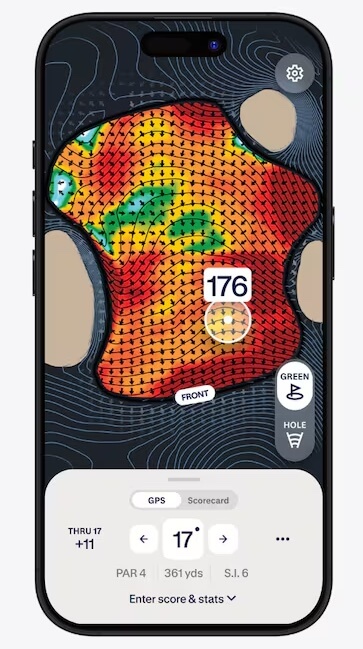
One of the primary concerns of the beta testers was with the in-round functionality of using the GPS and the scorecard. Yes, the enhanced GPS that updated the way targets work and added surrounding hole imagery was useful, but it was difficult to go back and forth between the scorecard and GPS on the app because that function was hidden behind a three-dot menu.
“We’re looking at social and friend experiences in the app. Like creating communities and having golfers engage with other golfers.” – Tom Padula
So GHIN made the change to make it easy to toggle between the functions. Of course, Padula and his team were also actively testing the app.
“It’s not bad to work in the golf business and do testing at the golf course,” Padula said.
And there is much more to come. Padula says part of the road map for 2027 is making the app more social.
“We’re looking at social and friend experiences in the app,” Padula said. “Like creating communities and having golfers engage with other golfers.”
This would go beyond Challenges and competing with friends. For example, a function that allows you to compare your stats to friends’ and even tour players’.
Speaking of stats, the USGA is in the pilot phase of implementing Rules AI into the GHIN app. Announced in May of this year, Rules AI is currently available to about 750,000 golfers and should be available to everyone in spring 2027. Ultimately, Rules AI seeks to make the many rules of golf more accessible: ask a rules question and get a specific, tailored response.
“Rules AI is designed to continue making the Rules of Golf easier to navigate and meet golfers where they are, on the course and on their mobile devices,” said USGA CEO Mike Whan at the time of the announcement.
But Padula says AI can be used for much more than rules. It can give personalized insights to golfers.
“If golfers want to ask questions about their stats we’ll be able to return that data in an interesting way,” Padula said.
Ultimately, the GHIN app update is a step in the USGA efforts to grow the game.
“This is really just the foundation for what we want to do in the coming years and months and launching this app will enable us to do that even faster and better,” Padula said. “We want to bring more golfers into the community, elevate the USGA brand with people, and continue to grow people who are part of our overall AGA and USGA community.”