


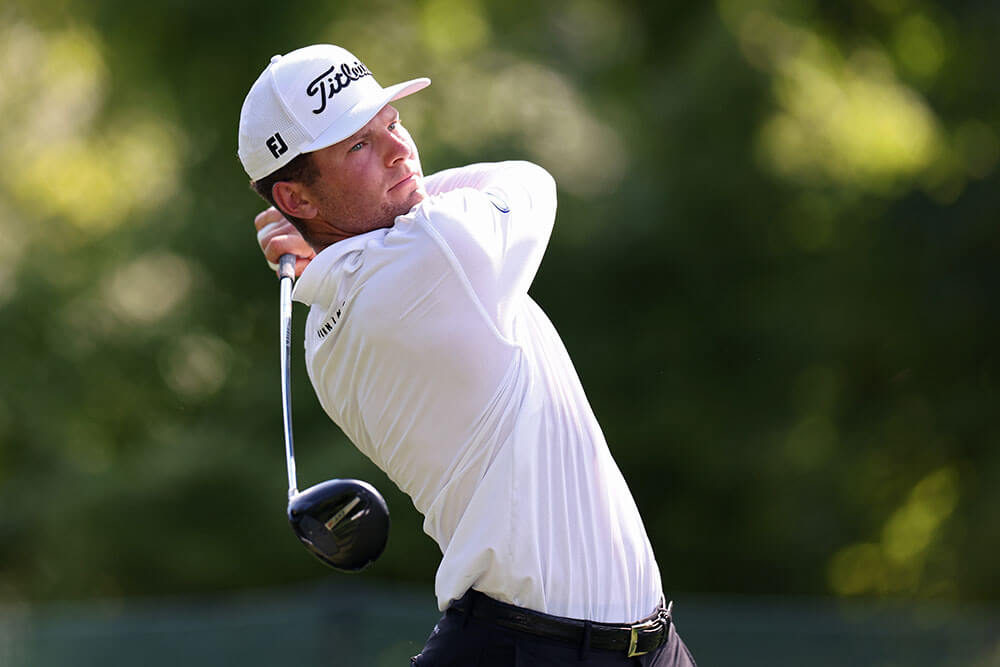
It was Pablo Picasso who said “youth has no age,” an interesting existential concept that doesn’t necessarily apply to the PGA Tour, at the moment anyway, as another wave of brilliant young players are making themselves comfortable restructuring the game’s hierarchy.
Consider the winners of the last three full-field tour events. They are 21-year-old Jackson Koivun, 24-year-old Michael Thorbjornsen and 24-year-old Michael Brennan.
Admittedly, the depth of fields ratchets up this week as the FedEx Cup playoffs begin at the FedEx St. Jude Championship, reintroducing Scottie Scheffler and Rory McIlroy, among others, after their late-summer sabbaticals.
But as the list of graduates from PGA Tour University demonstrates, the path to success on the tour, like many things, has been compressed for the best of the best.
“The learning curve is much shorter,” said Trevor Immelman, the analyst on CBS Sports’ tour coverage.
Koivun may be a rarity because he arrived on tour with greater expectations than Ludvig Åberg, Thorbjornsen, David Ford and Ben James, and the fact that he won the 3M Open in his third pro start validated the hype.

As for Brennan, he won his first PGA Tour start last year at the Bank of Utah Championship after an eight-win career at Wake Forest and, for all of youth’s blessings, there are still lessons to be learned.
“I got off to such a good quick and hot start that I thought it would be easier. I was like, oh, I’ve already won one, like this is going to be a piece of cake,” Brennan said Sunday night after winning the Wyndham Championship, salvaging a season that included only one top-10 finish before he won at Sedgefield Country Club.
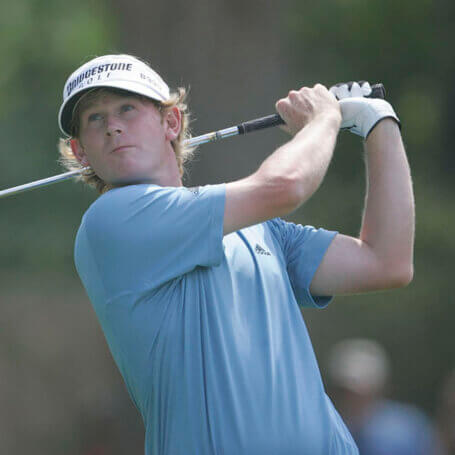
Brandt Snedeker, the 45-year-old captain of the U.S. Presidents Cup team, was rookie of the year in 2007 with one victory and he sees a difference in players transitioning from college now.
“Every kid I play with at that age, I’m in awe of how refined their game is. It’s not like there’s massive holes.
“When I turned pro I had massive holes in my game. I knew it, but I could get hot and do whatever. These kids don’t have that, so it’s fun to watch,” said Snedeker, who has the benefit of picking from among the young stars for his team at Medinah in September.
The creation of PGA Tour U, which now fast-tracks the top college players to the tour, provides a modern avenue that circumvents the traditional and still available route via the Korn Ferry Tour and Q-School.
It also dovetails with the evolution of college golf, which has better prepared players for the next step. James, who finished his college career at Virginia earlier this year, held the 36-hole lead at the RBC Canadian Open, his first professional start, and he finished third at the Wyndham Championship, shooting 62 on Thursday and 61 on Sunday.
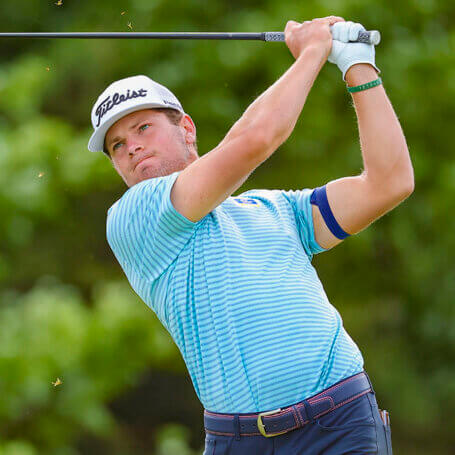
“These kids’ games are so much more refined when they turn pro now versus back when we didn’t have Trackman, we didn’t have these launch monitors and everything, where you kind of had to play more by feel. These guys know everything and they’re coming out prepared,” Snedeker said.
“When they’re playing in college golf, they’re playing like professionals now. The way they practice, the way they do everything. Back when I was playing college golf, it was more like, hey, go figure it out. Now it’s very regimented.”
As Snedeker suggests, technology has altered the equation. The instant feedback provided by launch monitors and the evolution of swing videos has eliminated some of the guesswork related to swing mechanics. The younger generation has grown up with those things, allowing them to maximize their power while eliminating a level of uncertainty about what’s happening with their swings.
“Let’s just say I used to look at my swing in 2D video, and I would spot something that didn’t look right to me, or I didn’t like how it felt, and then I would have to go down different rabbit holes to find a solution, and I didn’t even know if going down that rabbit hole was going to make me better or worse, so you had to do the old dig it out of the dirt,” Immelman said.
“Nowadays, they hit this one shot, and within a second they see all the data right there, and they know immediately, and so they can fast-track the learning curve, as well as not change things unnecessarily.”
It also reinforces the notion that someone like Koivun, who has unconventional elements to his swing, can trust what he’s doing because of the feedback he gets.
“It just seems like the leap from college to professional golf has gotten a little smaller. Obviously my good friend, Tommy Morrison, has been turning it up on Korn Ferry [Tour], and seeing [Thorbjornsen] win, giving guys the pathway to get to the PGA Tour is obviously super helpful,” said Koivun, who elected to stay for his junior year at Auburn despite earning his PGA Tour card following his sophomore season in 2025.
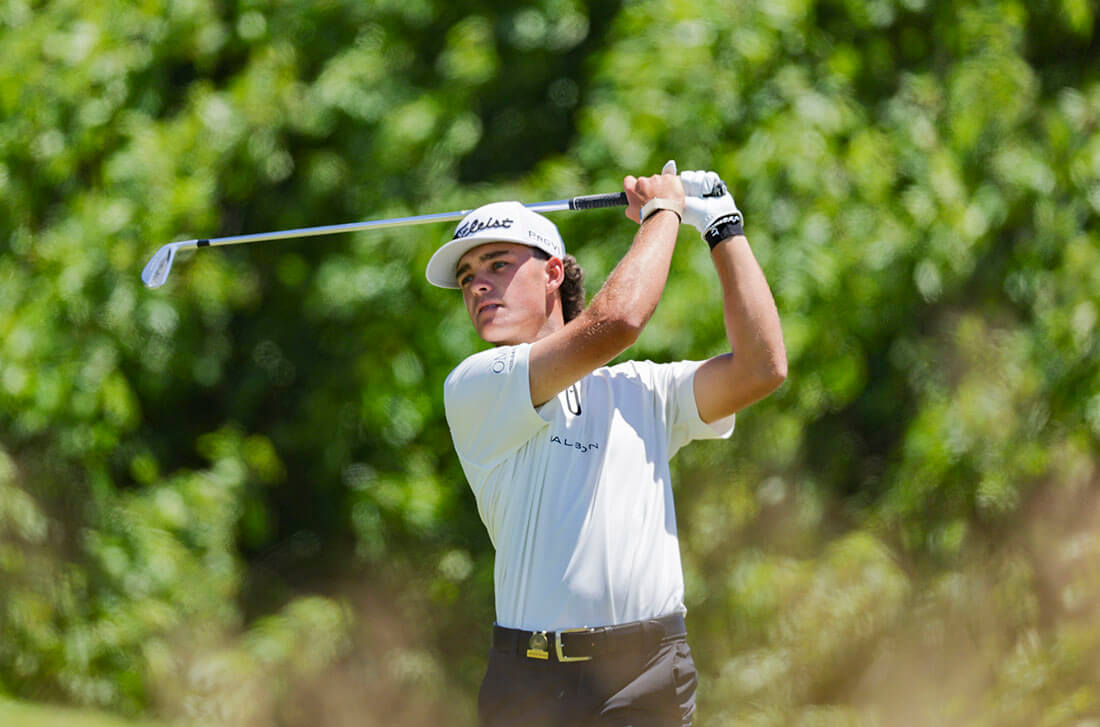
It is not, however, a one-size-fits-all model. For 27-year-old Ryan Gerard, a full season on the Korn Ferry Tour after his career at North Carolina allowed him to stairstep his way onto the big tour.
“I think if you asked every 22-year-old kid, they think they’re ready to be there because you kind of have to have that mindset and you almost don’t know better. So yeah, if you can throw them in the fire, great,” Gerard said.
“But I think developing talent at Korn Ferry Tour level, PGA Tour Americas level … it might not be as much of, like, just a blow-by as you might think. I think it did a lot for me in my career.
“For me, I needed that learning curve. Obviously there are guys that don’t and have had a lot of really good success early on, but I think they’re special guys and rare talents.”