

Editor’s note: This story was first published in PineStraw Magazine in August 2021.
Even the closest of brothers look to pulverize one another in competition. This was undoubtedly the case at the North and South Open held at Pinehurst Country Club in April 1907. The tournament hinged on the battle between Scottish expat siblings, both employed as professionals at Pinehurst – head man Donald Ross, 34, and his kid brother and assistant, Alex Ross, 27.
Outdistancing their fellow competitors, the Rosses stood deadlocked atop the leaderboard after Saturday’s morning round with identical scores of 73. Donald took charge during the afternoon’s closing 18, surging to a comfortable lead of four strokes over Alex with six holes to play. But a couple of loose shots by Donald frittered away half of the cushion, and his regrettable 7 on the 16th dissipated it altogether. The Ross brothers finished the championship tied again, but Alex capped his comeback by winning the playoff. His third North and South title equaled Donald’s victory total in the event.
For Alex, the triumph ignited his greatest season, while 1907 would also mark a critical milestone in Donald’s life: His crowning architectural achievement, Pinehurst’s No. 2 course, would debut later that year.
The Ross brothers’ emergence as notable figures in American sport could not have been foreseen during their youth in Dornoch, a remote northerly town in the Scottish Highlands. The eldest of four brothers (John was two years younger, Alex seven and Aeneas nine), Donald was drawn to golf in his youth and frequented the local course at every opportunity. But, as the eldest, Donald was expected to support himself financially at an early age. It seemed a pipe dream to be able to make a living from golf in his home village – Dornoch Golf Club did not even employ a professional. The boys’ father, Murdo Ross, a stonemason, steered his sons toward traditional trades like his own and, at age 14, Donald began an apprenticeship with local carpenter Peter Murray. While the woodworking skills he acquired would prove useful, Donald found shopwork overly confining.
The lad was much more interested in the comings and goings at the local club where Old Tom Morris of St. Andrews had just transformed Dornoch’s seaside links into a magnificent test of golf. The lure of the redesigned links was irresistible to the oldest Ross boy. He spent every spare hour outside the carpentry shop there, caddying and playing, and quickly developed into a stellar golfer.
“Being the older brother, it was left to me to order (Alex) about occasionally, and, as you would expect, he generally told me to mind my own business.” — Donald Ross
Dornoch Golf Club’s secretary, John Sutherland, impressed with Donald’s talents, thought he might be the right man to become the club’s first golf professional, but he believed the young Ross, by then 19, needed further seasoning. Who better to provide it than Morris? Old Tom had mastered the varied skills required of professionals: greenkeeping, clubmaking, instruction, competitive playing – he was four times the “Champion Golfer of the Year” – and managing the disparate needs and bruised egos of members. Disregarding his parents’ wishes, Donald headed south to St. Andrews in 1892 to begin an apprenticeship with the legendary Morris. So miffed was the family that Donald’s mother, Lillian, refused to speak to Sutherland for some time.
In “The Life & Times of Donald Ross,” author Chris Buie suggests that Ross’ exposure to Old Tom’s multi-layered role at St. Andrews would be the “template Ross used in his approach to Pinehurst and the development of American golf.” Following his apprenticeship with Morris, Ross received additional training in Carnoustie at Simpsons Golf Shop, founded in 1883 by renowned clubmaker Robert Simpson.
In November 1893, Ross returned to Dornoch and became the golf club’s professional, a job he enjoyed except for the tedium of greenkeeping. “What I really did was to go out in overalls on my hands and knees and care for the turf and the bunkers and the greens,” Ross said. “And how I used to hate it. But, as it turned out, that was the best training I could have had for what turned out to be my future.”
Alex, 14 and a natural golfer, joined his brother in the Dornoch shop. “Being the older brother, it was left to me to order him about occasionally, and, as you would expect, he generally told me to mind my own business,” Donald said. It made for a busy, though not particularly prosperous, life for the golfing brothers. In the 1890s, Dornoch Golf Club (now Royal Dornoch Golf Club) was far from the must-play golf destination it is today. Given its backwater inaccessibility – the closest railroad station was 7 miles distant – few outsiders visited Dornoch. If intrepid Harvard professor Robert Willson had not made his way to the town during his 1898 holiday abroad, the Ross brothers might never have left the Scottish Highlands.
Recently hooked on golf, the American arranged for a series of lessons from Donald that resulted in the educator’s rapid improvement. The delighted professor was doubly pleased with Donald’s recommendation of a local tailor who took care to measure both of Willson’s sleeve lengths – an unusual nicety.
Impressed with Donald’s acumen, Willson advised him to consider emigrating to America, indicating that golf was new in the country and there was money to be made. “He said I could make 50 cents an hour for lessons,” recalled Ross in an interview. “You see that was three times what I was making in Dornoch.” Willson also urged Donald to “call him up” should he ever find his way to Boston.
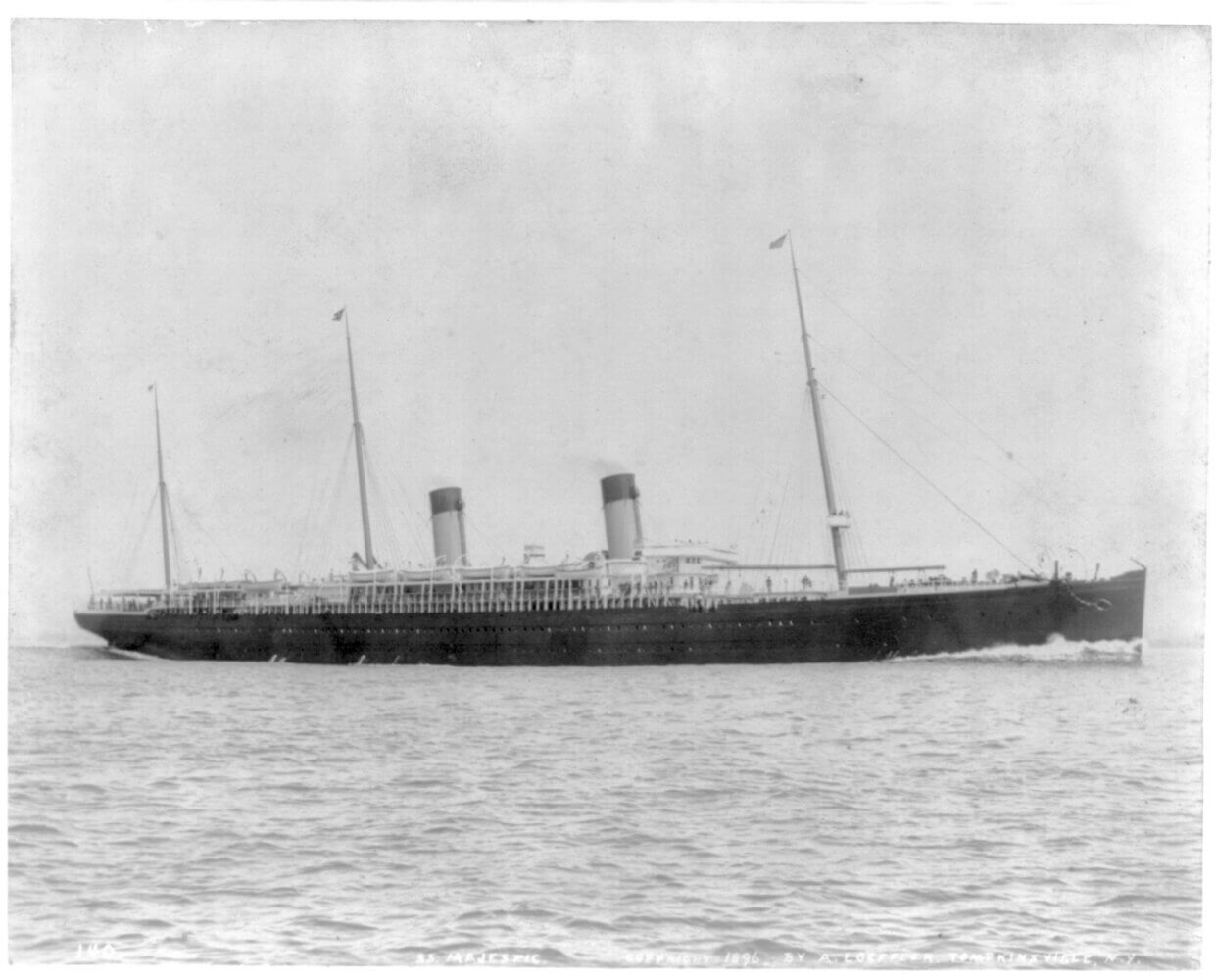
Ross wasted little time mulling over the pros and cons of leaving Scotland. By March of the following year he was bidding adieu to Alex and the rest of his family and sailing off on the ship Majestic to New York. Once in America he boarded a train for Boston, arriving at that city’s South Station with $2 in his pocket. Ross sought to contact Willson in hopes the Harvard professor would assist him in getting settled. After a kindly operator showed the perplexed Scot the vagaries of using a telephone, Ross was able to reach his lone American friend. Willson told him to take the trolley to his home but, fearful of exhausting his limited resources, Ross hiked the 8-mile distance. Willson greeted his erstwhile swing instructor with a sandwich and a glass of milk.
As luck would have it, the fledgling Oakley Golf Club, where Willson was a charter member, was looking to hire its first professional. With the professor vouching for Ross’ credentials, he was quickly hired. While Ross was getting settled into his new post, there was an unforeseen development in the construction of the Oakley course. Several holes required rerouting after the club failed to renew a lease on the land where the holes were supposed to be built. Adding to this chaotic state of affairs was the unavailability of the course’s architect due to illness.
The desperate Oakley board asked Ross if he would take charge of relocating the holes. Their new professional had hands-and-knees experience with turf maintenance and proper drainage. So, why not? He assured the board he was up to the task.
With the additional responsibilities thrust upon him, Ross persuaded the Oakley board to hire a second professional to give lessons and assist with clubmaking. The man he had in mind was an ocean away – his brother, Alex. Soon, the younger Ross, now 21, made his own Atlantic crossing, joining Donald at Oakley.
By the fall of 1900, the new holes laid out by Ross were ready for play. His surehanded work received rave reviews, and the grateful Oakley board paid him $2,000 for his efforts. The dutiful son promptly forwarded the windfall to his mother in Dornoch. It was Donald’s first taste of the kind of money that could be earned by designing golf courses.